

Driving Financial Excellence: Essential Executive KPIs for Automotive Dealers/Importers in MENA

In our new 8-part series covering essential KPIs for Dealers/Importers in the MENA region, we now focus on Executive Financial metrics—the high-level indicators that provide leadership with a holistic view of dealership performance. While departmental KPIs focus on operational details, executive financial metrics offer a broader perspective on overall business health and sustainability. For Automotive Dealers/Importers across the MENA region, who often manage complex, multi-faceted businesses in diverse market environments, having clear visibility of these financial indicators is essential for strategic decision-making. This article explores the key financial KPIs that executives should monitor to drive profitable growth and business sustainability in the unique context of MENA markets. Profitability Metrics: Measuring Overall Financial Performance Profitability metrics provide fundamental insights into business health: Return on Assets (ROA): This measures how efficiently the dealership is using its assets to generate profit, calculated by dividing net income by total assets. Industry benchmarks typically range from 5-8% for well-performing dealerships. This comprehensive metric helps executives assess overall operational efficiency and asset utilisation across all departments. In capital-intensive MENA markets, where real estate and facility investments often represent significant portions of total assets, optimising ROA requires careful balance of asset utilisation and market presence. Return on Investment (ROI): This calculates the return generated relative to the capital invested in the dealership, showing how effectively management is using invested capital. Dealers often target 15-20% ROI. This is particularly important for dealer groups and investors comparing performance across multiple stores or considering new acquisitions. In rapidly developing MENA markets, ROI expectations may need adjustment based on market maturity and growth potential. EBITDA: This measures operational profitability before accounting for non-operational expenses. For dealerships, EBITDA typically ranges from 2-4% of total revenue. Many dealer groups and potential buyers evaluate dealerships based primarily on EBITDA multiples, making this a critical valuation metric. For businesses operating across multiple MENA countries, comparing EBITDA performance against market-specific benchmarks provides valuable insights into relative performance. Net Profit Margin: This shows the percentage of revenue that translates to bottom-line profit after all expenses. Industry averages range from 10-12% for new vehicle dealers. While seemingly small, this margin represents significant dollars on high-volume sales and helps executives compare performance across different-sized operations. In price-sensitive MENA markets, maintaining healthy margins while remaining competitive requires sophisticated pricing and cost control strategies. Departmental Contribution: This breaks down profit contribution by department (new vehicles, used vehicles, service, parts, F&I). Well-structured dealerships typically see 30-40% from fixed operations, 30-35% from F&I, and the remainder from vehicle sales. This breakdown helps executives identify underperforming areas and allocation opportunities. Understanding the unique departmental contribution mix in specific MENA markets helps executives evaluate performance against regional benchmarks. Liquidity and Cash Flow Metrics: Ensuring Financial Stability Liquidity metrics help assess the dealership’s ability to meet financial obligations: Current Ratio: This measures short-term liquidity by dividing current assets by current liabilities. Healthy dealerships maintain ratios between 1.5 and 2.0. Lower ratios may indicate potential cash flow problems, while significantly higher ratios might suggest inefficient asset utilisation. In MENA markets with longer supply chains and potential payment delays, maintaining appropriate liquidity buffers is essential for stability. Quick Ratio (Acid Test): This provides a stricter liquidity measure by excluding inventory from current assets. Dealers typically maintain quick ratios around 1.0-1.2. Given the capital tied up in inventory, this metric offers executives a clearer picture of immediate liquidity without relying on inventory liquidation. In markets with longer turnover cycles, this ratio provides essential insights into true liquidity position. Operating Cash Flow: This tracks the cash generated from core operations. Strong dealerships generate consistent positive operating cash flow that exceeds net income due to non-cash expenses. In seasonally variable MENA markets, monitoring trends against historical patterns helps identify cash flow issues early. Days Cash on Hand: This calculates how many days the dealership could operate using available cash. Industry benchmarks suggest 30-45 days as a healthy target. In volatile or seasonal markets, maintaining adequate reserves ensures business continuity. Floor Plan Aging: This monitors the age of inventory financed through floor plan credit lines. Well-managed dealerships maintain 70% of inventory under 60 days old. Extended aging increases carrying costs and risk. In MENA markets with longer supply chains, balancing inventory freshness with selection requires sophisticated management. Operational Efficiency Metrics: Optimising Resource Utilisation Efficiency metrics help identify opportunities to improve productivity: Expense-to-Revenue Ratio: This measures operating expenses as a percentage of total revenue. Industry benchmarks target 11-13%. Breaking this down by expense category helps identify cost control opportunities. In high-cost MENA markets, maintaining competitive ratios requires ongoing optimisation. Personnel Expense as Percentage of Gross Profit: This calculates total personnel costs relative to gross profit. Industry standards suggest 45-50%. As the largest controllable expense, this metric deserves close executive attention. Labour costs vary widely across MENA markets, making local benchmarking essential. Inventory Turnover Rate: This measures how quickly inventory is sold and replaced. New vehicles target 6-8 turns annually, used vehicles 12+. Faster turnover reduces carrying costs and depreciation risk. In markets with long supply chains, optimising turnover requires strategic planning. Days Supply of Inventory: This calculates how long current inventory would last at current sales rates. Targets suggest 45-60 days for new vehicles and 30-45 for used. Excessive supply ties up capital, while insufficient supply limits sales. MENA markets often face import delays, making supply balance critical. Fixed Coverage Ratio (Absorption Rate): This measures what percentage of fixed expenses are covered by gross profit from fixed operations. Dealers target 85-100% for stability during sales downturns. In seasonal MENA markets, strong absorption is essential for resilience. Growth and Market Performance Metrics: Measuring Business Development Growth metrics help evaluate business expansion and competitive position: Sales Growth: This tracks year-over-year revenue growth for established locations. Healthy dealerships target 5-10%. In rapidly developing MENA markets, growth expectations should reflect market maturity and potential. Market Share Trend: This monitors changes in the dealership’s share of total market sales. Tracking both absolute and relative share helps executives evaluate competitive strength. Customer Lifetime Value (CLV): This calculates total
Revolutionising Automotive Aftersales: Inside the Digital Transformation with Solera’s PlanManager
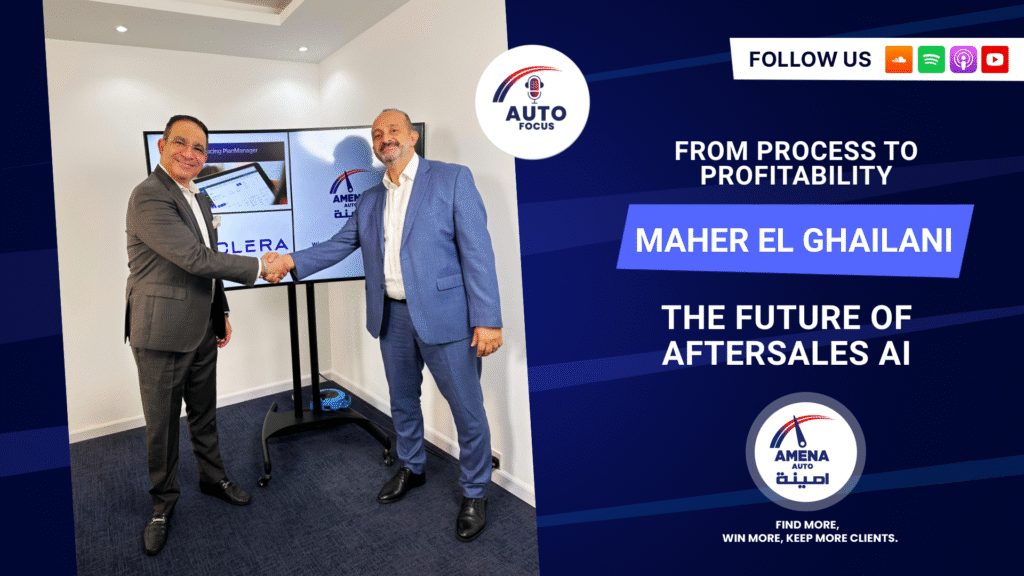
In a rapidly evolving automotive landscape, the aftersales sector faces unprecedented challenges—from capacity constraints and skilled labour shortages to spiralling costs and customer expectations for digital experiences. In our latest episode of “The Future of Automotive Aftersales,” AMENA Chairman and Founder Alan Waley sits down with Maher El Ghailani, Area Managing Director for MENAT at Solera, to explore how cutting-edge technology is addressing these industry pain points. The Pressing Need for Digital Transformation The conversation opens with a stark reality check: the aftersales industry is under extreme pressure. Post-COVID capacity issues have created an average backlog of 3.4 weeks for repair work, whilst bodyshops struggle with a shortage of skilled labour despite having an average of 7 employees per shop. Meanwhile, parts costs have increased by 6% year-on-year, and longer repair times are significantly impacting customer satisfaction. “The challenges today are really centred about the customer journey and customer satisfaction,” explains Maher. “Customers today are the key to retain, and in order to retain them, you should bring them smooth and digital journeys.” Enter PlanManager: A Complete Digital Solution At the heart of this transformation lies PlanManager by Solera—a comprehensive body shop management system (BMS) that AMENA has partnered with Solera to deliver across the MENAT region. Unlike traditional systems, PlanManager offers an end-to-end digital claims management solution that connects every stakeholder in the repair ecosystem. The system encompasses: • Kickstarting repairs through a dedicated inspection app that captures vehicle details and damage images before the vehicle even arrives at the facility • Collection and delivery management via a reception app that handles rental car allocation, damage documentation, and customer communications • Intelligent workshop planning with auto-scheduling that allocates the right technician to each task • Parts management integrated with suppliers for seamless ordering and tracking • Financial oversight through comprehensive accounting and reporting dashboards Real-World Impact: The Numbers Speak PlanManager isn’t just theoretical innovation—it’s delivering measurable results. Based on studies from the UK and Netherlands, users are experiencing: • +3% increase in net profitability • +10% workforce utilisation improvement • Reduced key-to-key times getting customers back on the road faster • Enhanced visibility across the entire repair process Jim Thomas, Director of SMART Bodyshop Solutions, shares his experience: “Within the first week we agreed to replace the current BMS with Shop Manager. This transition enabled us to run with clarity, confidence and a new way of working for the existing team, simplifying processes and using the apps to help define key information.” The AI Advantage What sets PlanManager apart is its intelligent use of artificial intelligence throughout the repair journey. As Maher explains, “Using AI will accelerate the aftersales processes, especially in terms of repair. Now we enable shops to be rapid in terms of repair cycle times and also give them quick visibility on the process.” The AI capabilities provide objective assessments, eliminate subjective decision-making, and automate routine tasks—freeing skilled technicians to focus on what they do best: quality repairs. Addressing the Chinese Brand Challenge An intriguing discussion point revolves around whether newcomers to the market—particularly Chinese automotive brands—find it easier to adopt digital solutions. Maher notes that whilst these brands benefit from competitive pricing and scale, “Competition is always good. There is a shift in technology, and if there is competition, the price would be interesting for the customer.” The key takeaway: whether established player or new entrant, digitalisation is no longer optional—it’s essential for survival in today’s market. Customer-Centricity Through Emotional Connection Perhaps the most compelling aspect of the conversation centres on customer engagement. Maher emphasises that satisfaction alone isn’t enough: “Companies should connect emotionally with the customer through smooth communication, direct communication, and also indirect through social media.” PlanManager facilitates this through: • Self-service portals giving drivers 24/7 access to repair status • Two-way communications via email and text alerts • Automated updates regarding estimated completion dates • Digital surveys capturing customer feedback through the reception app This level of transparency and communication transforms what has historically been an opaque, frustrating process into a modern, professional experience. The AMENA-Solera Partnership: Local Expertise Meets Global Innovation The strategic partnership between AMENA and Solera represents a powerful combination. Solera brings: • Global leadership in vehicle lifecycle management, serving 190+ OEMs and 1,000+ insurers • Validated by 250M+ claims across 100+ countries • Proprietary data from Solera-owned development centres worldwide • Seamless integration with market-leading estimating systems like Qapter AMENA contributes: • Deep local market knowledge across the MENAT region • Established relationships with major automotive groups • Cultural and operational expertise specific to regional requirements • Comprehensive support and training infrastructure “Through our collaboration, through your expertise as AMENA and your contacts and your professionalism, we are sure that we’re going to make the market more professional,” Maher states. “In 3 to 5 years, we’re going to have good expectations for the promotion of profitable business.” Looking Ahead: The Future Roadmap The conversation concludes with insights into what’s next. Solera is concentrating on: • Enhanced data and AI capabilities across all solutions • Fleet management solutions leveraging telematics and connected vehicle data • Electric vehicle adaptation as the mechanical repair landscape shifts towards electrical systems • ADAS and autonomous mobility support for increasingly sophisticated vehicles For bodyshops, the message is clear: those who embrace digital transformation will thrive, whilst those clinging to traditional methods will face mounting challenges. Why This Matters Now As average job sizes decrease whilst administrative burdens increase, shops that don’t invest in technology will need to employ more staff simply to maintain current volumes. PlanManager offers an alternative path—one where efficiency gains, improved profitability, and enhanced customer satisfaction create a virtuous cycle of growth. The system has already proven successful across Europe, North America, Australia, and Belgium, with over 300 customers benefiting from reduced cycle times, improved visibility, and streamlined operations. Ready to Transform Your Aftersales Operations? If you’re interested in exploring how PlanManager can revolutionise your body shop operations, AMENA offers free online demonstrations. As Alan concludes in the podcast: “I
Maximising F&I Performance: Essential KPIs for Automotive Dealers/Importers in MENA

In our new 8-part series covering essential KPIs for Dealers/Importers in the MENA region, we now turn our attention to the Finance & Insurance (F&I) department—often referred to as the dealership’s most profitable square metres. The F&I department has evolved from a simple paperwork processor to a critical profit centre for Automotive businesses across the MENA region. As vehicle margins continue to face pressure, F&I performance has become increasingly vital to overall dealership profitability. To optimise this crucial department, Dealers/Importers need to implement and monitor the right Key Performance Indicators (KPIs). This article explores the essential F&I metrics that drive profitability, efficiency, and compliance in the unique MENA Automotive market. Product Penetration Metrics: Maximising Revenue Opportunities Product penetration metrics measure how effectively your F&I department sells additional products and services to vehicle buyers: Finance Penetration Rate: This fundamental metric measures the percentage of vehicle sales financed through your dealership rather than outside financing or cash purchases. In the MENA region, where banking relationships and finance options vary significantly between markets, monitoring this rate is particularly important. Industry benchmarks typically target 70-80% for new vehicles and 60-70% for used vehicles. Higher rates indicate effective finance department performance and significant profit opportunity. Top performers focus on offering competitive rates and building relationships with multiple lenders to accommodate various customer credit profiles specific to regional markets. Service Contract Penetration: This tracks the percentage of vehicles sold with extended service contracts or warranties. In the harsh environmental conditions prevalent across much of the MENA region (extreme heat, dust, etc.), these products offer genuine value to customers while providing substantial profit to dealerships. Industry averages range from 40-45%, while top performers achieve 55%+ penetration. These products typically generate $800-1,200 in profit per contract, making them crucial to F&I department profitability. Effective presentation of the value proposition based on vehicle reliability data and region-specific repair cost analysis improves this metric. GAP Insurance Penetration: This measures the percentage of financed vehicles sold with Guaranteed Asset Protection insurance. Industry benchmarks range from 20-30%, with higher rates for longer-term loans and vehicles with faster depreciation. In MENA markets, where insurance requirements and regulations differ significantly between countries, having market-specific knowledge of insurance products and regulations is essential for maximising appropriate penetration. Vehicle Protection Products Penetration: This tracks the sale of protection packages, theft deterrent systems, and other vehicle protection products as a percentage of total sales. The extreme climate conditions in many MENA markets make protection products particularly valuable, and well-performing F&I departments achieve 25-35% penetration across these products. Product bundling strategies often improve overall penetration rates. Financial Performance Metrics: Measuring Profitability Financial metrics reveal the true contribution of your F&I department to overall dealership profitability: Average F&I Income Per Vehicle Retailed (PVR): This calculates the total F&I department income divided by the number of vehicles sold. Industry benchmarks range from $1,200-1,500 for mainstream brands and $1,800-2,200 for luxury brands, though these figures can vary significantly across different MENA markets. Top performers may exceed $2,500 PVR. This comprehensive metric reflects overall F&I effectiveness and is often tied to management compensation. Product Gross Profit: This tracks the profit generated from the sale of F&I products. It’s typically broken down by product type to identify the most profitable offerings. Understanding product profitability helps F&I managers focus on high-margin products that also provide genuine customer value, especially those that address region-specific concerns like extreme heat protection or extended parts availability. F&I Department Contribution: This measures the net profit contribution of the F&I department after all direct expenses. As front-end margins on vehicle sales continue to compress, F&I contribution has become increasingly vital to overall dealership profitability, often accounting for 30-40% of total dealership profit. In luxury-oriented markets like the UAE, this contribution can be even higher. Average Products Per Deal: This tracks the average number of F&I products sold per vehicle transaction. Industry benchmarks range from 1.5-2.0 products per deal, while top performers achieve 2.5+ on average. This metric helps identify opportunities for appropriate product packaging and presentation improvements. In the relationship-focused business culture of the MENA region, building trust is essential for multi-product sales success. Operational Efficiency Metrics: Streamlining Processes Efficiency metrics help identify bottlenecks and opportunities to improve the customer experience while maximising profitability: F&I Deals Per Manager: This tracks the number of deals processed per F&I manager per month. Efficient departments handle 80-100+ deals per manager monthly. This metric helps determine appropriate staffing levels and identifies process bottlenecks. In markets with highly seasonal sales patterns, like those affected by summer heat or seasonal religious observances, this metric may fluctuate significantly throughout the year. Contract Approval Rate: This measures the percentage of finance applications approved by lenders. Lower approval rates indicate either customer credit quality issues or insufficient lender relationships. Well-performing F&I departments maintain relationships with 15-20+ lenders to accommodate various credit profiles. In MENA markets where banking regulations and credit reporting infrastructure vary significantly between countries, understanding local lending parameters is crucial for maximising approvals. First Pass Funding Rate: This tracks the percentage of contracts funded by lenders on first submission without requiring corrections or additional documentation. Higher rates (target: 90%+) indicate efficient processes and proper documentation practices. Low rates create cash flow delays and necessitate contract rewrites that damage customer experience. In markets with more complex documentation requirements, maintaining high first-pass rates requires meticulous attention to detail and strong lender relationships. Compliance and Risk Metrics: Protecting Your Business In the diverse regulatory environments across MENA markets, compliance metrics are essential for managing risk: Compliance Audit Scores: This measures performance on internal and external compliance audits examining adherence to regional regulatory frameworks. In MENA markets, this includes compliance with country-specific consumer protection laws, financial services regulations, data protection requirements, and tax compliance. Regulations vary significantly across MENA countries, with GCC nations typically having more formalised regulatory structures. Top dealerships conduct regular internal audits aligned with local regulatory requirements and maintain detailed documentation of compliance practices specific to each market they operate in. Rate Markup Distribution: This analysis examines
Driving Automotive Marketing Performance: Essential KPIs for Dealers/Importers in MENA

In our new 8-part series covering essential KPIs for Dealers/Importers in the MENA region, we now focus on Marketing—a critical function that drives dealership growth and customer acquisition. The Automotive marketing landscape has undergone dramatic transformation in recent years, particularly across MENA markets where digital adoption has accelerated rapidly. Today’s successful Dealers/Importers must balance traditional marketing approaches with sophisticated digital strategies to reach customers effectively in this evolving environment. This article explores the key performance indicators that drive marketing excellence for Automotive retail operations in the unique context of MENA markets. Digital Marketing Metrics: Maximising Online Effectiveness Digital metrics help quantify the performance of your online marketing initiatives: Website Traffic: This measures the total number of visitors to your dealership website. Beyond raw visitor count, it’s valuable to segment this by traffic source (organic search, paid search, social media, direct). Most dealerships aim for consistent month-over-month growth. Modern dealerships typically track this through Google Analytics or similar platforms, looking at metrics like average time on site and bounce rate alongside total visitors. In MENA markets, where mobile usage often exceeds global averages, paying particular attention to mobile traffic performance is essential. Lead Conversion Rate: This calculates the percentage of website visitors who take a desired action such as submitting a contact form, requesting a quote, or scheduling a test drive. Industry benchmarks typically range from 1.5% to 3% for dealership websites. Optimising landing pages, forms, and calls-to-action can significantly improve this metric. In the MENA region, where customer service expectations are often high, ensuring rapid response to digital leads directly impacts conversion success. Cost Per Lead (CPL): This measures how much your dealership spends on marketing to generate each new lead. It’s calculated by dividing total marketing spend by the number of leads generated. Automotive industry averages range from $25-$45 per lead, though this varies by market and vehicle segment. Lower CPL indicates more efficient marketing spend. In diverse MENA markets, CPL can vary significantly between countries and should be benchmarked against local standards. Search Engine Rankings: This tracks where your dealership appears in search results for relevant keywords like “[brand] dealer [city]” or “new cars [city].” First-page rankings, particularly in the top three positions, dramatically increase visibility and traffic. Many dealerships invest in SEO and local search optimisation to improve these rankings. In the MENA region, optimising for both English and Arabic search terms (where relevant) is essential for maximum market penetration. Pay-Per-Click (PPC) Performance: This measures the effectiveness of paid search advertising, including metrics like click-through rate (CTR), cost per click (CPC), and conversion rate. Automotive industry CTR averages range from 1.5% to 3.5% for search ads. Effective keyword targeting and ad copy can significantly improve these metrics. In multilingual MENA markets, testing ad performance across different languages and cultural contexts often yields substantial performance improvements. Social Media and Reputation Metrics: Building Your Digital Brand These metrics help evaluate your dealership’s online presence and customer perception: Social Media Engagement Rate: This measures how actively your audience interacts with your social media content through likes, comments, shares, and clicks. Engagement rates of 1-3% are considered good in the Automotive industry. Content featuring actual customers, behind-the-scenes dealership stories, and new model reveals typically generate the highest engagement. In the relationship-focused MENA markets, authentic engagement often drives higher conversion than purely promotional content. Online Review Metrics: This tracks both the quantity and quality of reviews across platforms like Google, Facebook, and regional platforms such as Yallamotor, Dubizzle, and Opensooq. The average star rating (aim for 4.5+ stars) and review response rate (target 100%) are particularly important as they directly influence consumer purchase decisions. Regional consumer research indicates that over 80% of MENA Automotive customers consult online reviews before visiting a dealership, with particular emphasis on Arabic-language reviews for localised customer experiences. Social Reach and Audience Growth: This measures the size of your social media audience and how quickly it’s growing. While raw follower counts matter less than engagement, consistent growth indicates effective content strategy. Many dealerships track month-over-month follower growth rates across platforms. In MENA markets, where social media usage rates are among the highest globally, building social presence is particularly valuable for brand development. Share of Voice:This measures how much your dealership dominates the conversation in your market compared to competitors. It can be calculated by analysing mentions across social media, news, and review sites relative to competitors. Higher share of voice typically correlates with stronger brand awareness. In competitive MENA metropolitan markets like Dubai, Riyadh or Cairo, tracking share of voice helps gauge marketing effectiveness against well-funded competitors. Traditional Marketing Metrics: Measuring Offline Performance Despite digital growth, traditional marketing remains important in many MENA markets: Marketing Return on Investment (ROI): This calculates the return generated from marketing investments, measured by attributing sales and gross profit to specific marketing channels and campaigns. Sophisticated dealerships track ROI by marketing channel to optimise their marketing mix. Industry leaders aim for 3:1 or higher ROI on marketing spend. In the diverse MENA region, ROI can vary significantly by market channel and should be measured against localised benchmarks. Walk-in Traffic: This counts the number of customers who physically visit the dealership, often tracked through customer relationship management (CRM) systems. While digital leads are important, many customers still prefer to walk in, making this a vital metric. Dealerships typically track traffic patterns by day of week and time of day to optimise staffing. In many MENA markets where shopping malls remain cultural hubs, dealerships with mall locations or showrooms often measure specific metrics related to mall foot traffic conversion. Marketing Campaign Response Rate: This measures the percentage of recipients who respond to direct marketing efforts like mail, email, or SMS campaigns. Industry averages range from 0.5% to 2% for direct mail and 10-15% for email campaigns to existing customers. Higher response rates indicate more relevant messaging and offers. In MENA markets, where SMS open rates often exceed 95%, SMS marketing frequently outperforms email for immediate response campaigns. Cost Per Sale/Acquisition (CPA): This calculates the
Automotive Sales Mastery: Series 8: The Core Traits and Mindset of Exceptional Salespeople

Success in Automotive sales stems from a unique combination of skills, mindset, and behaviours. Technical knowledge and negotiation skills are essential, but the real differentiator is the salesperson’s attitude, self-belief, and motivation. In this comprehensive guide, we delve into the qualities, behaviours, and mindset that define top-performing salespeople in the MENA Automotive market, combining the principles of psychology, self-talk, and motivation. The Archetypes of Salespeople Salespeople typically fall into one of three categories, each with its strengths and potential pitfalls: 1.The Relationship Builder: Strengths: Builds trust and long-term relationships, excels in understanding customer needs. Challenge: May struggle to push for a close due to an overemphasis on empathy. 2.The Challenger: Strengths: Thrives on questioning assumptions and educating customers with confidence. Challenge: Can come across as overly assertive if not balanced with tact. 3.The Problem Solver: Strengths: Expert at addressing customer pain points with tailored solutions. Challenge: May get lost in details, missing broader opportunities. Qualities of Top Salespeople The most successful salespeople combine technical expertise with interpersonal mastery. Key qualities include: Persistence: A relentless drive to achieve goals despite challenges. Empathy: Understanding and addressing customer emotions and needs. Amiability: Being approachable and friendly, which fosters trust. Focus: Maintaining goal-oriented behaviour and staying organised. Product and People Knowledge: Mastering technical details and building rapport effectively. The Role of Attitude in Sales Attitude often outweighs skill in determining success. Here’s how a positive attitude enhances performance: Energy Transference: Customers pick up on enthusiasm and positivity, shaping their experience. Resilience: A strong attitude helps bounce back from rejection and maintain motivation. Consistency: Staying positive ensures peak performance, even during challenges. The Power of Self-Belief and Motivation Motivation and belief in one’s abilities are essential for overcoming obstacles and achieving targets. Strategies to cultivate these qualities include: Focus on Activity, Not Just Results: Breaking the sales process into manageable stages ensures consistent effort. For instance: * Engaging more customers increases the likelihood of closing deals. * Viewing each interaction as an opportunity helps maintain motivation, even without immediate results. Set Clear Goals: Define specific, actionable targets and align daily activities with long-term objectives. Clear goals foster purpose and focus. Draw Inspiration from Success Stories: Take cues from figures like Steve Jobs, whose persistence in creating Apple epitomises the power of self-belief and resilience. Visualise Success: Imagine achieving monthly sales targets and the rewards that follow. Visualisation reinforces confidence and inspires action. Find Purpose in Your Work: Purpose-driven goals, such as enhancing a customer’s life with the right vehicle, provide deeper meaning to daily tasks. Harnessing the Power of Self-Talk Self-talk directly influences performance. Reframing negative thoughts into empowering affirmations builds confidence and resilience: * Replace “I can’t close this deal” with “I’ve prepared well and will give my best effort.” * Avoid pre-judging customers based on superficial impressions. * Use affirmations like: “I am capable of exceeding my targets” to reinforce positive beliefs. The Cycle of Positive Self-Talk The “Self-Talk Cycle” shows how thoughts influence actions and results: * Positive Thoughts → Confident Actions → Positive Results → Reinforced Beliefs. Breaking negative cycles early by reframing thoughts prevents underperformance. Strategies to Cultivate a Winning Mindset Celebrate Small Wins: Recognising progress boosts morale and motivation. Stay Present: Focus on controllable factors in the moment rather than dwelling on failures or uncertainties. Surround Yourself with Positivity: Engage with supportive mentors, peers, or inspirational materials. Persist Through Challenges: Learn from setbacks and view them as growth opportunities. Commit to Lifelong Learning: Embrace adaptability and continuous improvement in an ever-evolving market. Conclusion Exceptional salespeople embody a blend of positive attitude, motivation, and belief in their abilities. By combining technical skills with psychological strategies, they build trust, drive results, and navigate cultural nuances in the MENA market. Success in Automotive sales begins with the right mindset—a journey that AMENA is here to support. AMENA’s Commitment to Sales Excellence At AMENA, we empower OEMs and Dealers/Importers with tailored tools and training to build high-performing sales teams. From fostering motivation to mastering advanced sales strategies, we help you achieve exceptional results. Visit www.amenaauto.me to transform your sales potential today. Contact Us Today! office@amenaauto.me Follow us @ Linkedin | Youtube| Instagram | Facebook We express our sincere gratitude to all the veterans and experienced professionals in the automotive industry for their valuable input and advice when we write our articles. We take pride in our commitment to embracing technology, including AI, to enhance the quality of our articles.
Automotive Sales Mastery: Series 7: Understanding Sales Psychology

In the world of Automotive sales, success isn’t just about product knowledge or negotiation skills; it’s about understanding the psychology behind buying decisions. Why do customers choose one car over another? What influences their emotional and logical thought processes? This article explores the critical role of sales psychology and offers actionable insights for mastering the art of influence in the MENA region. The Dual Minds of a Customer Human decision-making is guided by two key components: the conscious mind and the subconscious mind. Understanding how these interact can help sales professionals navigate the sales process more effectively: Conscious Mind (Logical): Processes facts and data, such as price, fuel efficiency, and features. Subconscious Mind (Emotional): Influenced by feelings, gut instincts, and personal desires. For instance, customers may justify a luxury car purchase with logical reasons like safety or resale value, but the true motivator is often emotional—the status, excitement, or pride it brings. The Four Stages of Buying and Learning Sales psychology aligns closely with the stages of learning, which mirror the buying process: Unconscious Incompetence: Customers are unaware of their needs. Conscious Incompetence: They recognise their needs but lack clarity on solutions. Conscious Competence: They evaluate options and begin making decisions. Unconscious Competence: They instinctively move forward with a choice. As a salesperson, your role is to seamlessly guide customers through these stages and address their conscious and subconscious concerns. Techniques to Influence the Subconscious Mind Subliminal Conditioning: While direct subliminal advertising is no longer permissible, the principles of subtle suggestion remain effective. For instance: * Use evocative language and imagery: “Imagine yourself cruising down Sheikh Zayed Road in this sleek, all-electric sedan.” * Frame options positively: Instead of asking, “Would you like a small or large warranty?” say, “Would you prefer the comprehensive or premium coverage?” Emotional Anchoring: Tap into the customer’s emotions by creating memorable moments during the sales process: * Highlight features that resonate emotionally, such as family safety or advanced technology. * Use stories to illustrate benefits, e.g., “One of our customers shared how the adaptive cruise control saved them during a long drive.” Subtle Visual Cues: Visual presentation influences subconscious perceptions * Showcase cars in pristine, well-lit environments. * Use colours and design elements that evoke trust and sophistication. Avoiding Psychological Traps Don’t Overwhelm the Customer: Too many options or excessive information can lead to decision fatigue. Simplify choices. Avoid Negative Framing: Highlight benefits rather than deficiencies. Instead of, “This model doesn’t have an extended warranty,” say, “This model comes with a comprehensive three-year warranty.” Steer Clear of Manipulation: Building trust requires authenticity. Focus on aligning solutions with customer needs rather than pushing unnecessary features. The Role of Sales Conditioning Subtle conditioning techniques can nudge customers toward favourable decisions: Priming: Leave positive impressions by mentioning high-value aspects frequently. For instance, “This EV model has been a top choice for professionals in Dubai.” Parameter Setting: Guide counteroffers by suggesting ranges. For example, “We typically see trade-ins in the range of AED 80,000 to AED 85,000 for cars like yours.” Conclusion Sales psychology is an essential skill in today’s competitive Automotive market. By understanding and leveraging the interplay between logic and emotion, sales professionals can build trust, inspire confidence, and guide customers toward making decisions they feel good about. AMENA’s Commitment to Automotive Sales Excellence At AMENA, we empower OEMs and Dealers/Importers with cutting-edge strategies that harness the power of sales psychology. From training on customer engagement to mastering influence techniques, we help you drive results and build lasting relationships. Visit this page to elevate your sales expertise. Contact Us Today! office@amenaauto.me Follow us @ Linkedin | Youtube| Instagram | Facebook We express our sincere gratitude to all the veterans and experienced professionals in the automotive industry for their valuable input and advice when we write our articles. We take pride in our commitment to embracing technology, including AI, to enhance the quality of our articles.
Automotive Sales Mastery: Series 6: Closing (Sealing the Deal with Confidence) and Follow-Up

Closing a sale is the culmination of all your efforts throughout the sales process. It’s the moment of truth, where trust, rapport, and negotiation come together. In the MENA Automotive market, where customer expectations are high, closing effectively requires strategy, empathy, and impeccable timing. This article explores the best practices and techniques for mastering the art of closing. Understanding the Importance of Closing Closing isn’t just about getting a signature; it’s about ensuring the customer feels confident and satisfied with their decision. A successful close: 1. Confirms Commitment: Solidifies the customer’s decision to purchase. 2. Eliminates Doubts: Reassures the customer by addressing lingering concerns. 3. Strengthens Relationships: Leaves a positive impression that fosters loyalty. Best Practices for Closing the Sale Recognise Buying Signals: * Pay attention to verbal and non-verbal cues such as repeated compliments about the car, inquiring about financing, or discussing delivery dates. Choose the Right Closing Technique: * Assumptive Close: Proceed as if the customer has already decided. For example, “Shall we finalise the paperwork?” * Alternative Choice Close: Offer two positive options. For instance, “Would you prefer the standard package or the deluxe package?” * Summary Close: Recap the car’s benefits and how they align with the customer’s needs. “You mentioned safety and comfort were priorities, and this model excels in both. Shall we proceed?” Address Objections Before Closing: * If objections arise, handle them confidently and empathetically. Use techniques like the “what if” strategy to resolve concerns. For example, “What if we include a complimentary maintenance package?” Create Urgency Without Pressure: * Highlight time-sensitive promotions or limited inventory subtly. For example, “This colour is in high demand and may not be available for long.” Reinforce the Decision: * Once the customer agrees, celebrate their choice. Say, “Congratulations! You’ve made an excellent decision.” This affirmation builds confidence and excitement. Avoiding Common Closing Mistakes Don’t Rush: Allow the customer to arrive at their decision naturally. Avoid Overloading Information: Keep the focus on key benefits rather than introducing new details at the last moment. Don’t Neglect Post-Close Engagement: Ensure the customer feels valued even after signing. Follow-Up – Turning Sales into Loyalty The follow-up stage is where exceptional salesmanship truly shines. It’s an opportunity to reinforce the customer’s decision, address any post-purchase concerns, and nurture a lasting relationship. Why Follow-Up Matters Follow-up is critical for: Enhancing Customer Satisfaction: Ensures the customer’s experience remains positive after the sale. Building Long-Term Loyalty: Keeps your dealership top-of-mind for future purchases. Driving Referrals: Satisfied customers are more likely to recommend your services. Effective Follow-Up Strategies The Immediate Follow-Up Call: * Contact the customer within 24 hours of the sale. Use this opportunity to thank them and confirm their satisfaction. * Example: “Hi, I just wanted to thank you again for your purchase and ensure everything is in order. Is there anything else you’d like to discuss?” Provide Additional Information: * Share helpful resources like user manuals, warranty details, or tips on optimising their new car’s features. * Example: “I realised I forgot to mention how to set up the infotainment system. Let me walk you through it.” Ongoing Engagement: * Schedule periodic check-ins to ensure the customer remains happy with their purchase. Mark significant milestones like the car’s first service or anniversary. * Example: “It’s been six months since your purchase. How has the car been performing for you?” Personalise Your Approach: * Tailor follow-up communication to the customer’s preferences and needs. For example, a family-oriented buyer might appreciate updates on safety recalls, while a tech enthusiast might value tips on software updates. Encourage Reviews and Referrals: * Politely ask the customer to share their positive experience online or refer friends and family. For example, “If you’ve enjoyed your experience, we’d love for you to share a review. It helps us serve customers like you better.” Avoiding Common Follow-Up Pitfalls Don’t Be Inconsistent: Follow up with every customer, not just those you perceive as high-priority. Avoid Being Transactional: Focus on building relationships rather than pushing additional sales too soon. Don’t Delay: Prompt follow-up shows professionalism and care. Conclusion Closing and follow-up are interconnected stages that define the customer’s experience. Mastering these ensures not only a successful sale but also a satisfied and loyal customer who will return to your dealership for years to come.
Mystery Shopping: The Unseen Driver of Automotive Excellence and Customer Delight

In the dynamic realm of the Automotive industry, the concept of mystery shopping has risen as a pivotal mechanism for fostering customer satisfaction and achieving operational excellence. This strategic instrument transcends mere evaluative functions; it delves into the essence of the consumer experience, from the initial engagement to the provision of after-sales services, ensuring that each interaction is in harmony with the brand’s ethos. Mystery shopping within the Automotive domain acts as a critical lens, offering a transparent view of the consumer journey, highlighting exemplary areas and those necessitating refinement. This approach is not solely about identifying shortcomings; it embodies a proactive stance towards crafting an experience that resonates deeply with clients, nurturing loyalty and encouraging repeat business. A principal benefit of mystery shopping lies in its capacity to offer a holistic overview of the customer journey. It conducts a thorough analysis ranging from the consumer’s initial requirements and experiences to the nuanced obstacles they might encounter, providing pragmatic insights for improvement. This detailed scrutiny assists Automotive enterprises in not only fulfilling but surpassing customer expectations, ensuring a fluid transition from exploration to purchase and beyond. Given the above, it is no wonder that OEMs and Dealerships are turning to mystery shopping as an indispensable tool for gaining a competitive edge. As a strategic asset, mystery shopping transcends the traditional evaluations—it delves into the very core of the customer experience, from the initial interaction to the quality of Aftersales support, aligning every touchpoint with the brand’s vision. AMENA’s Mystery Shopping Service Offers an unparalleled window into the customer’s journey, bringing to light areas of commendable performance and those that require attention. It’s an active endeavour to sculpt experiences that resonate, fostering loyalty and stimulating continuous business. OEMs and Dealers can utilise mystery shopping to gain a complete picture of the customer journey, drawing upon insights from both their own operations and those of their competitors. This broad perspective enables them to go beyond meeting expectations to exceed them, thus ensuring a smooth transition from browsing to buying. The real benefit of mystery shopping lies in its capacity to enact strategic transformation. By refining the customer experience to meet today’s high standards, it acts not just as a measure but as a beacon guiding automotive businesses toward unmatched service excellence and operational efficacy. At its heart, mystery shopping commits to elevating the customer interaction to an art form, ensuring that Automotive companies not only meet but define the standards in a highly competitive market. The direct feedback garnered from mystery shopping is often more telling than traditional feedback methods. This candid insight allows businesses to truly gauge the effectiveness of their strategies and operations from the customer’s viewpoint. Incorporating technology, AMENA enhances mystery shopping with advanced tools and software, offering detailed, actionable data. This might include measuring showroom engagement or evaluating communication tactics, thereby expanding the precision and reach of the mystery shopping program. Particularly in the GCC region, where Automotive excellence is not a luxury but an expectation, mystery shopping is crucial. It is a tool that maintains competitive advantage and ensures services align with the high standards expected by customers. The feedback from mystery shopping also plays a critical role in training and development within Automotive firms. By pinpointing specific areas needing improvement, training can be tailored effectively, enhancing customer service and satisfaction. In conclusion, mystery shopping is not just a tactic—it’s a holistic strategy that enhances customer experience. It’s about understanding and surpassing customer expectations and securing a leading position in service excellence. By utilising AMENA’s mystery shopping services, Automotive businesses can ensure that they satisfy and captivate their clientele, driving loyalty and ensuring long-term success in the automotive arena. Follow us @ Linkedin | Youtube| Instagram | Facebook We express our sincere gratitude to all the veterans and experienced professionals in the automotive industry for their valuable input and advice when we write our articles. We take pride in our commitment to embracing technology, including AI, to enhance the quality of our articles.
AMENA and Georgian College Bring Bespoke Automotive Qualifications to the MENA Region
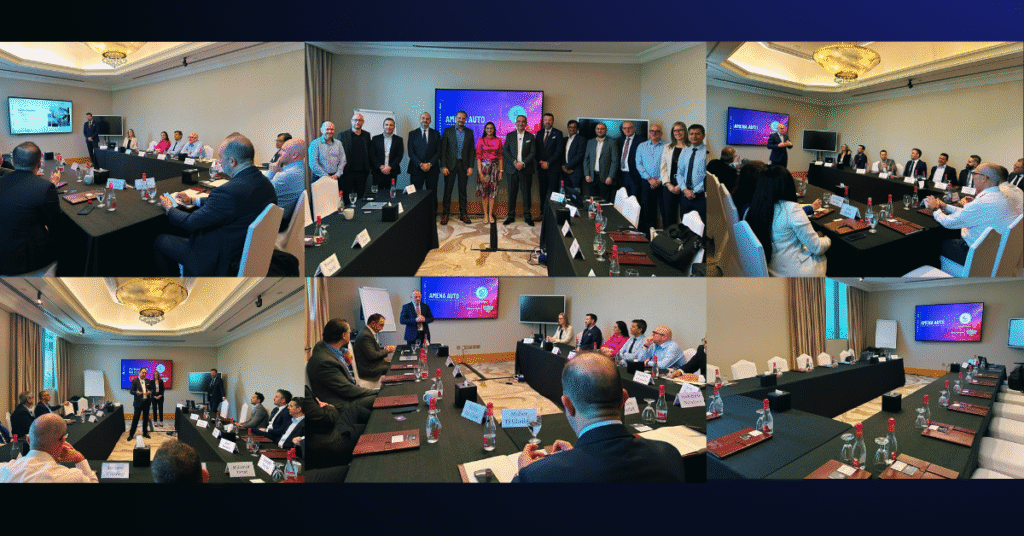
The Automotive industry across the Middle East and North Africa is evolving rapidly. Market growth, digital transformation, electrification, and rising customer expectations are all driving the need for new skills, new thinking, and new leadership at every level. Recognising this, AMENA and Georgian College have partnered to launch a suite of bespoke, regionally adapted qualifications for the MENA Automotive sector. Designed specifically for OEMs and Dealers/Importers, the new programmes will help businesses across the region to develop high-performing teams and future-ready leaders. Following an exclusive VIP Executive Workshop in Dubai, the first cohort of the new programme is set to commence in the third week of October 2025 — marking the start of an exciting new chapter for Automotive education and leadership development in the region. A Shared Vision for Industry Excellence The collaboration between AMENA — the region’s leading Automotive consultancy and training partner — and Georgian College — one of the world’s most respected Automotive business education providers — is built on a shared vision: * To create world-class, regionally relevant, and practically focused qualifications for MENA’s Automotive professionals. * To bridge the gap between academic excellence and the operational realities of OEM and Dealer/Importer businesses in the Middle East. * To support sales growth, aftersales excellence, customer experience leadership, and sustainable business performance across the region. Alan Whaley, Chairman of AMENA: “We are proud to partner with Georgian College to bring this new level of professional development to the MENA region. This is not off-the-shelf training — it is designed with and for our industry leaders to help them build stronger, more competitive businesses.” Industry Leaders Gather in Dubai To launch the partnership, AMENA and Georgian College hosted an invitation-only VIP Executive Workshop at the Grand Hyatt Dubai. The event convened senior executives and decision-makers from some of the region’s most respected OEMs and Dealers/Importers. Participants engaged in a focused dialogue on the leadership, operational, and customer experience challenges shaping the future of the industry. Sessions explored how training must evolve to meet today’s demands — moving beyond theory to deliver practical competencies that drive business results in areas such as: * Sales performance * Aftersales leadership * Parts and service profitability * CSI, NPS, and customer experience innovation * Financial management and strategic planning Attendees also provided direct input to help shape the content and delivery of the new programmes — ensuring they are fully aligned with the operational realities of MENA Automotive businesses. What the Programmes Will Deliver The new suite of qualifications is built around seven key modules: * Dealership Management * Financial Management * Customer Experience (including CSI and NPS) * New and Pre-Owned Sales Management * Parts and Accessories Management * Service Management * Strategic Business Planning Key features of the programmes include: * Modular delivery — flexible for busy working professionals * Blended learning — combining classroom, virtual, and self-paced components * Actionable outcomes — each participant will develop practical strategies for their own business * Regional adaptation — all content is aligned to MENA market and cultural dynamics The first cohort will launch in October 2025, with registration now open to OEM and Dealer/Importer partners across the region. A Partnership Built for Lasting Impact For Georgian College, this marks an exciting extension of its global leadership in Automotive education — bringing over 30 years of expertise to a fast-growing and dynamic MENA market. Kevin Weaver, President and CEO of Georgian College: “We’re proud to bring our decades of Canadian experience to this transformative partnership with AMENA, informed by local needs and designed to reflect the diverse realities, complexities and opportunities in the region. Together, we’ll inspire and empower today and tomorrow’s leaders with the strategic insights, best practices and tenacious drive to elevate the standards and future of the automotive industry.” For AMENA, this initiative is a natural extension of its mission to help OEMs and Dealers/Importers achieve greater success across: * Sales * Aftersales * Parts * CSI & NPS * Customer Experience Through this partnership, AMENA and Georgian College are offering its industry partners new pathways to build talent, drive profitability, and strengthen customer loyalty. Shaping the Future of Automotive Leadership in MENA With the launch of this initiative, Automotive businesses across the MENA region now have access to world-class qualifications designed specifically for their needs. OEMs and Dealers/Importers who participate will benefit from: * Enhanced leadership pipelines * Stronger business performance * Higher levels of customer satisfaction and loyalty * A more professionalised and future-ready workforce The journey begins in October — and AMENA and Georgian College look forward to working with forward-thinking Automotive leaders to shape the next generation of industry excellence. Partner with AMENA At AMENA, we help our partners Find More, Win More, and Keep More Clients — profitably. Our expertise spans Sales, Services, Parts, CSI, NPS, and Customer Experience — and through this new training partnership with Georgian College, we are offering even greater value to OEMs and Dealers/Importers seeking to elevate their performance. If you would like to explore how your business can participate in the new qualifications or partner with AMENA to drive growth, please visit www.amenaauto.me. Contact Us Today at office@amenaauto.me Follow us @ Linkedin | Youtube| Instagram | Facebook We express our sincere gratitude to all the veterans and experienced professionals in the automotive industry for their valuable input and advice when we write our articles. We take pride in our commitment to embracing technology, including AI, to enhance the quality of our articles. Watch the video here: https://youtu.be/x4n7wkZ1pb0?si=V7U4i_Mr8JCeuemz
Automotive Sales Mastery: Series 5 : Negotiation (Creating Win-Win Solutions) and Objection Handling

Negotiation is a delicate art that requires a balance of strategy, empathy, and effective communication. For Automotive sales professionals in the MENA region, understanding the cultural nuances and customer priorities can make all the difference in closing deals. This article dives into best practices for negotiating with customers while ensuring a mutually beneficial outcome. Understanding the Purpose of Negotiation Negotiation is not about confrontation; it’s about collaboration. The goal is to arrive at an agreement that satisfies the customer while protecting dealership profitability. Key objectives include: 1. Establishing Trust: Customers are more likely to negotiate in good faith when they feel respected and valued. 2. Building Value: Highlighting the car’s benefits and your dealership’s offerings justifies the price. 3. Ensuring Satisfaction: A satisfied customer is more likely to return and recommend your dealership. Best Practices for Successful Negotiation Lay the Groundwork Early: * Begin building trust during the meet-and-greet and qualification stages. By the time negotiation begins, the customer should feel confident in your professionalism. Frame the Conversation Positively: * Use phrases like, “Let’s work together to find a solution that works for both of us.” This sets a collaborative tone. Focus on Value, Not Price: * Highlight the car’s unique features, warranty coverage, and aftersales services. For example, if selling an EV, emphasise benefits like reduced running costs and environmental impact. Address Objections Proactively: * Anticipate common objections, such as price or trade-in value, and prepare responses that reinforce the car’s value. For instance, “I understand that price is a concern. However, this model comes with a five-year warranty, ensuring peace of mind for years to come.” Use the Foursquare Approach: * Present price, trade-in value, financing, and extras as a complete package. This gives you flexibility to adjust elements without significantly impacting profitability. Avoiding Common Pitfalls in Negotiation Don’t Undermine Your Value: Avoid discounting too quickly; it signals desperation. Avoid Aggression: Stay calm and focused, even if the customer becomes confrontational. Don’t Make Assumptions: Always confirm customer priorities before proposing solutions. Objection Handling – Turning Challenges into Opportunities Objections are a natural part of the sales process and provide an opportunity to address concerns, build trust, and strengthen the customer relationship. This article explores techniques for handling objections effectively in Automotive sales. Understanding Objections Common objections often stem from: Price Concerns: “It’s too expensive.” Time Delays: “I need to think about it.” Feature Preferences: “Does it come with a sunroof?” Rather than viewing objections as barriers, see them as an indication that the customer is engaged and considering the purchase seriously. Proven Techniques for Handling Objections Acknowledge and Validate: * Begin by showing empathy. For example, “I understand that price is important to you, and I’d like to ensure you’re getting the best value.” Clarify the Objection: * Ask open-ended questions to uncover the real concern. For example, “Could you tell me more about what you’re looking for in this feature?” Reframe the Concern: * Shift the focus from the objection to the car’s benefits. For instance, “While it may seem like an upfront investment, this EV will save you significantly on fuel costs over the years.” Use the “What If” Technique: * Offer solutions to overcome the objection. For example, “What if we included complimentary servicing for the first year? Would that make this car the right choice for you?” Practice the Trial Close: * Use a trial close to confirm the customer’s interest. For instance, “If we can address this concern, is this the car you’d like to own?” Common Pitfalls to Avoid in Objection Handling Don’t Dismiss Concerns: Always treat objections seriously and respectfully. Avoid Defensive Responses: Focus on solutions rather than justifying dealership policies. Don’t Rush: Take the time to understand and address the customer’s needs thoroughly. Conclusion Both negotiation and objection handling are vital skills in Automotive sales. By approaching these stages with empathy, strategy, and a focus on building value, you can turn challenges into opportunities and create a positive experience for your customers. AMENA’s Commitment to Automotive Excellence At AMENA, we provide tailored training and strategies to help OEMs and Dealers/Importers master negotiation and objection handling. Our solutions enhance CSI, NPS, and overall customer satisfaction. Visit this page to discover how we can support your sales success. Contact Us Today! office@amenaauto.me Follow us @ Linkedin | Youtube| Instagram | Facebook We express our sincere gratitude to all the veterans and experienced professionals in the automotive industry for their valuable input and advice when we write our articles. We take pride in our commitment to embracing technology, including AI, to enhance the quality of our articles.