

Why Your Customer Experience Might Be Losing Your Sales, Market Share, Customer Loyalty – and Profitability

Customer Experience in the MENA Automotive Sector: Time to Take Control In the MENA region’s automotive sector, customer expectations have quietly outpaced many dealerships’ ability to meet them. Even in well-managed dealerships, the customer experience can vary significantly between departments and channels. Customers today expect seamless, high-quality service from first click to final visit — and when those expectations aren’t met, they quietly disengage. The result isn’t always dramatic, but the impact is: lost sales opportunities, weakened customer loyalty, declining market share, poor public perception and ultimately, reduced profitability. It’s time to stop guessing and start managing customer experience like you would any other critical business function. Introducing the Ultimate Customer Experience Package At AMENA, we’ve developed the Ultimate Customer Experience Package — a region-specific, fully customisable programme designed to eliminate friction across your customer journey and help you: ✅ Sell more vehicles ✅ Protect and grow market share ✅ Retain more customers ✅ Improve CSI and NPS ✅ Increase profitability through loyalty and operational excellence ✅ Strengthen staff performance at every touchpoint What Makes This Programme Different? This is not a soft-skills workshop or a motivational talk. This is a strategic and operational framework delivered by seasoned automotive professionals who understand the dynamics of the MENA market. Here’s what’s included: ✅ Internal Mystery Shopping (Sales & Aftersales): See your customer journey exactly as it is — through the customer’s eyes. ✅ Competitor Mystery Shopping: Learn how your direct rivals are performing, and how you compare. ✅ Premium Retail Mystery Shop: We evaluate your dealership against non-automotive service leaders, not just other showrooms. ✅ Customer Interviews & Forums: Hear directly from your customers — especially the ones who left or almost didn’t buy. ✅ 2-Day Onsite Customer Journey Workshop: A comprehensive mapping and transformation session with your leadership team. Whether you take the full programme or focus on one module, the result is the same: greater control over the customer experience and stronger business outcomes. The Real Business Impact of Customer Experience The link between customer experience and profitability is no longer speculative. The data is clear: ✅ Dealers with consistent CX outperform their competitors in sales conversion rates. ✅ Clear customer journeys drive higher retention and more referrals. ✅ Satisfied customers spend more in aftersales, return more frequently, and promote the brand. ✅ Great experiences improve NPS, CSI, and staff morale simultaneously. And perhaps most importantly — ✅ Consistent customer experience protects and builds market share in an environment where customers have choices. Experience is now your brand. And in a competitive market, your margin and your growth depend on getting it right every time. Who Should Consider This Package? ✅ CEOs, Dealer Principals and GMs looking to protect margins and grow share. ✅ OEM Dealer Network Development Directors who want visibility and consistency across their markets. ✅ Sales Directors looking to convert more leads and strengthen conversion across the funnel. ✅ Aftersales Directors who must boost CSI and loyalty KPIs. ✅ Marketing and CX teams ready to align brand promise with real-world experience. Let’s Build the Experience That Builds Your Business AMENA has worked with leading brands across the region to transform their customer journey, lift performance KPIs, and redefine what good looks like in the dealership experience. If you’re serious about customer-centric growth, speak to our team about the Ultimate Customer Experience Package. 📞 +971 4 223 4548 📧 office@amenaauto.me 🌐 www.amenaauto.me Find More. Win More. Keep More Clients. Why Partner with AMENA At AMENA, we support OEMs and Dealers/Importers across the MENA region to achieve excellence in every corner of the business — from sales floor to service bay. Our consultancy and training solutions are built around real-world performance: increased sales, higher aftersales profitability, stronger CSI and NPS scores, and measurable customer retention. Whether you’re looking to lift your parts margin, redesign your customer journey, or transform your leadership culture, we partner with you to deliver practical, impactful results. Learn more about how we help Automotive businesses Find More, Win More, and Keep More Clients at www.amenaauto.me. Follow us @ Linkedin | Youtube| Instagram | Facebook We express our sincere gratitude to all the veterans and experienced professionals in the automotive industry for their valuable input and advice when we write our articles. We take pride in our commitment to embracing technology, including AI, to enhance the quality of our articles.
Automotive Sales Mastery: Series 4 : Test Drive and Trial Close – Experience the Difference

The test drive is a critical moment in the Automotive sales process. It’s the stage where customers move from imagining ownership to experiencing it firsthand. For sales professionals in the MENA region, where customer expectations are high, delivering a seamless and impactful test drive can set the foundation for a successful sale. This article explores how to optimise the test drive to ensure it’s not just a drive but an experience. The Purpose of a Test Drive A well-conducted test drive achieves multiple objectives: 1. Building Confidence: Customers can validate the vehicle’s claims by experiencing its performance, comfort, and features. 2. Creating Emotional Connections: Driving the car helps customers envision it as part of their daily lives. 3. Addressing Concerns: Demonstrating features in real-world conditions can alleviate doubts and objections. Best Practices for Conducting Test Drives Prepare the Vehicle: * Ensure the car is clean, fully charged (for EVs), and ready to drive. * Familiarise yourself with the vehicle’s unique selling points and anticipate potential questions. Tailor the Experience: * Begin by understanding the customer’s priorities. For instance, if they value technology, highlight features like advanced infotainment systems. * Use a route that showcases the car’s strengths, such as smooth highways for comfort or city streets for maneuverability. Engage During the Drive: * Use open-ended questions to encourage feedback, such as “How does the ride feel?” or “What do you think about the cabin noise levels?” * Employ mental ownership techniques by asking questions like, “Can you see yourself taking this to work every day?” Address Objections On the Spot: * If concerns arise, such as discomfort with seat adjustments, resolve them immediately to maintain momentum. Conclude Positively: * Recap the features they liked during the drive and link them to their needs. * Ask a trial close question, such as, “Does this feel like the right car for you?” to gauge interest. Common Pitfalls to Avoid Skipping the Prep Work: A poorly prepared car reflects badly on the dealership. Overloading Information: Focus on features that matter to the customer rather than listing everything. Neglecting Follow-Up Questions: Always inquire about their impressions to keep the conversation flowing. Trial Close – Securing the Commitment The trial close is a strategic step in the sales process, bridging the gap between the customer’s experience and their decision to buy. It’s not about pushing for a commitment but about testing the waters to ensure alignment. The Role of the Trial Close A well-timed trial close achieves: 1. Confirmation of Interest: Validates whether the customer likes the car enough to proceed. 2. Identification of Objections: Brings minor concerns to the surface before the final close. 3. Momentum Building: Keeps the conversation positive and focused on ownership. Effective Trial Close Techniques 1. Use Mental Ownership Questions: * “Can you imagine taking this on your weekend trips?” * “Wouldn’t this be perfect for your family outings?” 2. Frame the Decision Positively: * Replace intimidating words like “buy” with “own” to reduce pressure. For example, “Is this the car you’d like to own for the next few years?” 3. Address Objections with Confidence: * When minor objections arise, respond with reassurance and solutions. For instance, “If the colour isn’t your favourite, we have other options available.” 4. Ask Open-Ended Questions: * “What do you like most about the car so far?” * “Is there anything you’re unsure about?” Avoiding Mistakes in the Trial Close * Being Too Aggressive: Keep the tone conversational and friendly. * Neglecting Customer Feedback: Listen actively to understand their hesitations. * Skipping the Trial Close Altogether: Without it, the final close can feel abrupt and forced. Conclusion Both the test drive and trial close are pivotal in the sales process. They offer opportunities to build trust, address concerns, and guide the customer towards ownership. By mastering these stages, sales professionals can ensure a seamless and enjoyable customer experience. AMENA’s Commitment to Sales Excellence At AMENA, we empower OEMs and Dealers/Importers with strategies that optimise every stage of the sales journey. From creating impactful test drives to mastering trial closes, our solutions enhance CSI, NPS, and overall customer satisfaction. Visit this page to discover how we can help you achieve sales success. Contact Us Today! office@amenaauto.me Follow us @ Linkedin | Youtube| Instagram | Facebook We express our sincere gratitude to all the veterans and experienced professionals in the automotive industry for their valuable input and advice when we write our articles. We take pride in our commitment to embracing technology, including AI, to enhance the quality of our articles.
Automotive Sales Mastery: Series 3 : Trade-In and Vehicle Presentation– Unlocking Value

In the Automotive sales process, the trade-in stage is more than just a transactional step; it’s an opportunity to build rapport, understand your customer’s preferences, and set the stage for a successful deal. In this article, we explore best practices for handling trade-ins in the MENA region, ensuring the process is smooth, respectful, and aligned with modern customer expectations. Why the Trade-In Stage Matters Trade-ins are often emotionally charged. For many customers, their current vehicle represents years of memories and utility. Acknowledge this emotional connection and treat their car with respect to build trust and create a positive experience. Key Objectives of the Trade-In Process: 1. Qualify the Customer: Discuss their preferences, priorities, and buying motivations through discussions about their current car. 2. Position Yourself as a Trusted Advisor: Use this stage to demonstrate transparency and professionalism. 3. Set the Tone for Negotiation: Approach the trade-in with a collaborative mindset, avoiding adversarial tactics. Best Practices for Handling Trade-Ins Inspect Early in the Process: * Conduct the trade-in evaluation before the test drive or presentation to gather insights into the customer’s needs. * Use this opportunity to ask about their car’s history, such as “What made you choose this car?” and “What features do you love most about it?” Use the Trade-In as a Qualifying Tool: * Look for clues about the customer’s lifestyle. For example, a child seat may indicate a preference for family-friendly features. * Ask open-ended questions like “If there’s one thing you could change about this car, what would it be?” Handle Valuation Professionally: * Avoid giving a personal valuation; instead, use a third-party assessment to provide credibility. * Emphasise transparency by explaining the factors influencing the trade-in value. * Use terms like “independent buyer” or “specialist” instead of “trade” to avoid the implication of a low offer. Involve the Customer in the Process: * Inspect the car together, noting key features and areas for improvement. * Highlight any positive aspects, such as a well-maintained interior, while diplomatically addressing issues. Avoiding Common Pitfalls Don’t Rush the Process:Take time to explore the customer’s connection to their car. Avoid Negativity: Frame flaws in the car as opportunities for improvement rather than criticism. Don’t Assume Knowledge: Customers may not fully understand their car’s current value, so educate them tactfully. Conclusion The trade-in stage is not just about appraising a vehicle; it’s about building trust, understanding your customer, and laying the groundwork for a successful sale. By handling this stage with professionalism and empathy, you can create a positive experience that resonates with your customer long after they leave the dealership. Presentation – Crafting Desire A great car presentation is more than a walkthrough of features; it’s an opportunity to connect the customer’s desires with the benefits of the vehicle. In the MENA region, where customer expectations are high, delivering a memorable presentation is crucial to sales success. The Role of Presentation in Sales Presentation bridges the gap between a customer’s needs and the car’s features. It transforms “what it is” into “why it matters.” By aligning the car’s benefits with the customer’s lifestyle and emotions, you can make a lasting impression. Key Strategies for Effective Presentation Use Feature-Advantage-Benefit (FAB) Selling: * Feature: Highlight the car’s attributes, such as advanced safety systems or EV charging capabilities. * Advantage: Explain the general utility, e.g., “This EV charger ensures quick and efficient charging.” * Benefit: Tie it to the customer’s needs, e.g., “So you can enjoy seamless weekend getaways without worrying about range.” Tailor the Presentation: * Adapt to the customer’s priorities, such as luxury, practicality, or sustainability. * For families, emphasise safety features like ISOFIX anchors; for professionals, highlight tech integrations like wireless connectivity. Create a Visual Experience: * Walk the customer around the car, focusing on six key positions: front, side, back, interior, under the bonnet, and the driver’s seat. * Use storytelling to paint vivid scenarios, e.g., “Imagine arriving at your next meeting in this sleek, all-electric sedan.” Engage with Interactive Demonstrations: * Let the customer experience key features hands-on, such as testing the infotainment system or adjusting the ergonomic seats. * Highlight EV-specific features like regenerative braking or app-based charging controls. Avoiding Common Mistakes Don’t Feature Dump: Avoid listing features without context; always link them to benefits. Avoid Overloading Information: Focus on features that matter most to the customer. Don’t Skip Emotional Triggers: Cars are aspirational purchases—appeal to dreams and desires. Conclusion A powerful car presentation isn’t about selling the car; it’s about making the customer want it. By tailoring your approach, highlighting benefits, and creating emotional connections, you can elevate your sales game and leave a lasting impression. AMENA’s Commitment to Automotive Excellence At AMENA, we empower OEMs and Dealers/Importers with strategies that drive sales and customer satisfaction. From handling trade-ins with care to delivering memorable presentations, we enhance every aspect of the sales process. Visit this page to learn how we can help you succeed in the MENA Automotive market. Contact Us Today! office@amenaauto.me Follow us @ Linkedin | Youtube| Instagram | Facebook We express our sincere gratitude to all the veterans and experienced professionals in the automotive industry for their valuable input and advice when we write our articles. We take pride in our commitment to embracing technology, including AI, to enhance the quality of our articles.
AMP by AMENA: The Platinum Benchmark for Automotive Dealership Excellence in MENA

AMP by AMENA: The Regionally-Tailored Solution for Modern Automotive Dealerships In a region where customer expectations are rising, competition is fierce, and transformation is constant, traditional approaches are no longer enough. Automotive businesses across the Middle East need a bold new strategy — one that not only drives sales, but builds enduring loyalty, inspires operational excellence, and positions brands for long-term growth. In a region where expectations are rising and competition is fierce, AMP by AMENA delivers a bold new strategy. Built for the complexities of the MENA automotive market, it empowers dealerships to outpace the competition through data-led planning, KPI optimisation, and a relentless focus on sustainable growth and customer loyalty. Customised for the MENA Region. Powered by Results. Why AMP Matters for Today’s Automotive Leaders At its core, AMP helps Dealers and Importers Find More, Win More, and Keep More clients — profitably. It goes far beyond traditional training or benchmarking. Instead, AMP is a strategic framework that transforms every dimension of dealership operations — from Sales and Aftersales to CSI, NPS, and customer loyalty. Whether the objective is to enhance profitability, boost customer satisfaction, empower staff, or future-proof the network, AMP delivers results that are measurable, sustainable, and impactful. A Holistic Approach to Excellence AMP stands apart due to its deeply integrated methodology, refined through years of automotive expertise and local market insight. Specifically, it focuses on: Managing change in a dynamic industry environment Surpassing achievable targets — not just meeting minimums Strengthening brand positioning in competitive landscapes Fostering leadership across all levels of the organisation Turning the customer journey into a loyalty-building experience The Six Pillars of AMP 1. Dealer/Importer League This unique benchmarking tool evaluates performance across Sales, Aftersales, CRM, Marketing, and Bodyshop operations. Consequently, monthly league tables provide real-time visibility, fostering internal competition, best-practice sharing, and data-driven performance improvements. 2. Retailer Standards Assurance AMP defines operational excellence, aligns with brand expectations, and identifies gaps. As a result, it deploys tailored solutions to ensure efficiency, consistency, and a superior customer experience. 3. Network Enhancement Through this pillar, AMP lifts underperforming dealerships by introducing scalable best practices. In turn, it builds a culture where high performance becomes standard across networks of any size. 4. Operational Excellence This pillar delves into the behaviours and processes that drive success. Through competency analysis and performance mapping, AMP equips teams to consistently deliver results that build customer loyalty and profitability. 5. KPI Optimisation Rather than applying a one-size-fits-all model, AMP identifies and tailors the most relevant KPIs for each dealership. Financial, operational, and experiential indicators are refined and tracked to ensure continual, month-on-month growth. 6. Net Promoter Score (NPS) Customer perception defines success. Accordingly, AMP uses NPS insights to understand customer sentiment and improve service delivery. The ultimate goal is to create memorable journeys that lead to loyalty, advocacy, and brand trust. Why Leading Dealers and Importers Are Embracing AMP Top-performing automotive networks across the MENA region are turning to AMP because of its proven impact. Specifically, AMP enables leaders to: Increase profitability through strategic operational improvements Enhance retention through world-class service experiences Drive progress through actionable data and targeted insights Motivate staff with performance clarity and leadership pathways Foster an organisation-wide culture of excellence and transparency AMP’s Strategic Fit for the MENA Market The MENA automotive landscape blends tradition and innovation. Therefore, it demands that Dealers and OEMs deliver premium brand experiences while navigating regional nuances. AMP was built with this complexity in mind, offering regionally adapted yet globally aligned solutions. AMP addresses key priorities for the MENA market, including: Customer-centric strategies aligned with digital preferences Stronger focus on Aftersales profitability as a growth engine Real-world tactics to improve CSI and NPS performance Workforce development tailored to local cultural contexts The AMP Difference Unlike conventional training programmes, AMP is not about short-term gains or check-box exercises. Instead, it is a blueprint for long-term strategic evolution — empowering automotive leaders to build future-proof business models capable of thriving in today’s and tomorrow’s markets. Partner with AMENA for Sustainable Success At AMENA, we don’t just deliver services — we forge partnerships. AMP is a clear example of how we collaborate with OEMs, Dealers, and Importers across the Middle East to achieve lasting impact. Our broader service suite covers: Sales Excellence: Aligned with today’s digitally enabled buyers Aftersales Strategy: Driving loyalty and boosting revenue Parts Operations: Enhancing margin contribution and efficiency Customer Journey Mapping: From insight to CX transformation CSI/NPS Programmes: Elevating service quality to global standards Let’s Talk About Transforming Your Dealership Whether you’re an OEM, Importer, or Dealer Principal, AMP delivers the roadmap to measurable growth, customer loyalty, and operational brilliance. Don’t settle for incremental improvement — drive true transformation. Contact us today to discover how AMP can unlock your Dealership’s full potential. Email: office@amenaauto.me Phone: +971 (4) 223 4548 Website Page for AMP: www.amenaauto.me/amp/ Follow us @ Linkedin | Youtube| Instagram | Facebook We express our sincere gratitude to all the veterans and experienced professionals in the automotive industry for their valuable input and advice when we write our articles. We take pride in our commitment to embracing technology, including AI, to enhance the quality of our articles.
Automotive Sales Mastery: Series 2 – Qualification: Discovering What Truly Matters

The Dual Role of Qualification Qualification serves two purposes: deal qualification and customer qualification. While deal qualification addresses logistical aspects such as the type of car, body preference, or budget, customer qualification delves deeper into the person behind the purchase. Understanding both aspects is essential for tailoring your approach and building a meaningful connection. Deal Qualification: Key questions to ask include: * “Are you looking for a petrol or EV vehicle?” * “How many doors do you need in your next car?” * “What’s your timeline for making a decision?” Customer Qualification: Focus on personal details and lifestyle: * “What do you use your current car for most often?” * “Do you have any specific hobbies or activities that influence your choice of car?” * “What feature do you value most in your car?” Understanding Emotional Motivators Buying a car is often an emotional decision influenced by a customer’s personality and life circumstances. Recognising these emotions allows you to frame your pitch more effectively. Here are six common buyer types and how to engage with them: Ego-Driven Buyers: * Traits: Confident, status-focused, and assertive.. * Approach: Highlight luxury features and exclusive aspects of the car. Emphasise brand prestige and how it aligns with their image. Fear Buyers: * Traits: Cautious, risk-averse, and detail-oriented.. * Approach: Reassure them with facts and figures. Highlight safety ratings, aftersales support, and warranty options. Love Buyers: * Traits: Sentimental and driven by relationships.. * Approach: Relate the car to their personal connections, such as family safety or shared experiences. Money-Conscious Buyers: * Traits: Frugal and focused on financial value. * Approach: Demonstrate cost savings, fuel efficiency, and long-term value. Avoid overloading them with features they might not see as cost-effective. Imitation Buyers: * Traits: Influenced by trends and peer choices.. * Approach: Emphasise the car’s popularity and community appeal. Mention testimonials and reviews from other satisfied customers. Recreation Buyers: * Traits: Focused on hobbies and lifestyle needs. * Approach: Paint a vivid picture of the car’s role in their activities, such as towing a boat or driving to a golf course. The Gap Analysis A critical part of qualification is identifying the “gap” between the customer’s current situation and their desired outcome. Use open-ended questions to uncover this gap: * “What do you like most about your current car?”. * “Is there anything you wish your current car had?”. * “What’s motivating you to change your car now?”. By understanding what’s missing in their current experience, you can position the new car as the solution.. Practical Techniques for Effective Qualification Active Listening: * Let the customer do most of the talking. Show genuine interest by reflecting their responses back to them.. * Example: “So, comfort is a top priority for you because you frequently drive long distances. Is that correct?”. Observation Skills: * Pay attention to non-verbal cues such as body language, tone of voice, and pace of speech. * Notice details like stickers or items in their current car that hint at hobbies or family dynamics. Using the Trade-In as a Tool: * Inspect the customer’s current car to learn about their preferences and lifestyle. * Ask questions like: “What do you like most about this car?” or “What would you change if you could?”. Avoiding Common Pitfalls Don’t Make Assumptions: Avoid stereotyping customers based on appearance or initial impressions. Avoid Closed-Ended Questions Early On: Save yes/no questions for later stages. Don’t Rush the Process: Qualification is about understanding, not interrogation. Conclusion Qualification is more than just a step in the sales process; it’s the foundation for building trust and ensuring customer satisfaction. By understanding both the logistical and emotional aspects of your customer’s needs, you can position yourself as a trusted advisor and make the sales process seamless and enjoyable. AMENA’s Commitment to Automotive Excellence At AMENA, we empower OEMs and Dealers/Importers with strategies that transform every stage of the customer journey. From advanced qualification techniques to aftersales excellence, our solutions enhance CSI, NPS, and overall customer experience. Visit this page to learn how we can help you exceed expectations and drive success. Contact Us Today! office@amenaauto.me Follow us @ Linkedin | Youtube| Instagram | Facebook We express our sincere gratitude to all the veterans and experienced professionals in the automotive industry for their valuable input and advice when we write our articles. We take pride in our commitment to embracing technology, including AI, to enhance the quality of our articles.
NIO MENA: Reimagining Premium Electric Mobility in the Middle East
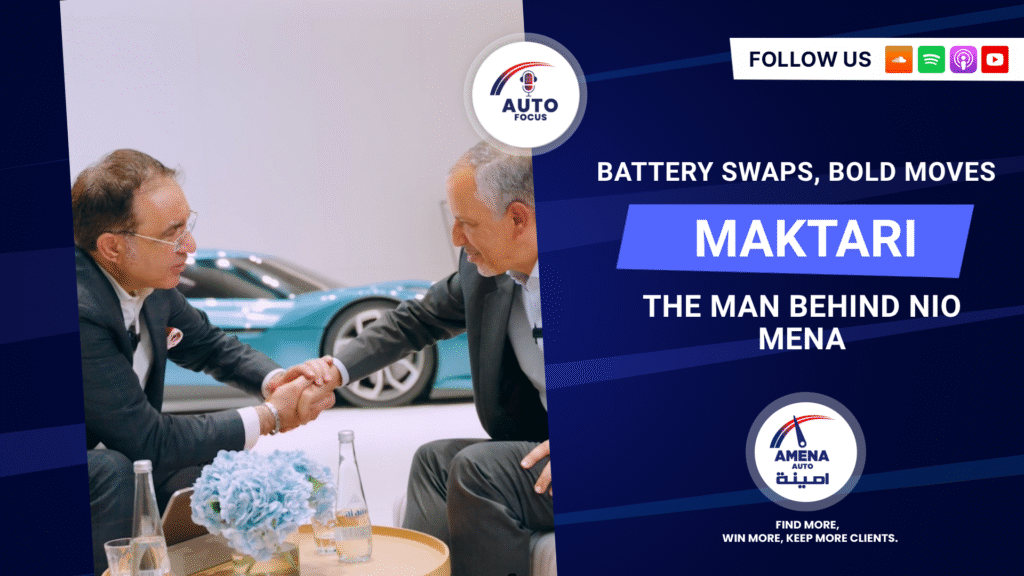
Introduction In a region defined by rapid transformation, technological ambition, and discerning consumers, NIO MENA is carving a bold new path. At the helm is Mohammed Maktari, a veteran of the Automotive industry whose deep-rooted passion for mobility and relentless curiosity have brought him to lead one of the most innovative electric vehicle (EV) brands to enter the Middle East. In an exclusive interview on The AutoFocus Podcast, Maktari offered rare insight into NIO’s strategy, its unique approach to EV technology, and how it intends to redefine customer experience across the region. From Sharjah to Shanghai: A Passion for Progress Maktari’s journey is anything but conventional. Driven by an early fascination with mechanics and mobility, his path took him from dismantling household appliances in Sharjah to leading some of the region’s most respected Automotive brands. Now, as the CEO of NIO MENA, he’s applying a lifetime of industry experience—both on the OEM and retail sides—to introduce a brand that is as much about vision as it is about vehicles. Why NIO? A Philosophy Built on Premium and Purpose What sets NIO apart in a crowded EV landscape? According to Maktari, it’s not just the technology—it’s the thinking. From day one, NIO positioned itself as a premium EV brand, meticulously crafted by international design teams, with a laser focus on aesthetics, functionality, and sustainability. “We don’t just manufacture vehicles,” he shared. “We craft experiences.” That experience begins at the NIO House in Abu Dhabi, designed not simply as a showroom but as a cultural space—complete with lounges, cafés, and event spaces—intended to connect people, ideas, and technology. The Game-Changer: Battery Swapping Technology Central to NIO’s innovation is its proprietary battery-swapping technology—a solution that sidesteps the conventional EV limitations around range anxiety and charging time. Unlike traditional supercharging, which strains power infrastructure and accelerates battery degradation, NIO’s Power Swap stations allow drivers to replace a depleted battery with a fully charged one in under five minutes. Each station houses up to 21 batteries, charged during off-peak hours to reduce energy load. This infrastructure is already a proven success in China, with over 3,000 stations deployed and partnerships with other OEMs to standardise the battery-chassis design. Meeting MENA’s Diverse Needs While the Gulf has emerged as one of the most infrastructure-ready regions for EV adoption, Maktari stressed that the Middle East and North Africa is not a one-size-fits-all market. NIO’s regional strategy reflects this diversity. The UAE, for example, boasts over 2,000 charging points but lacks strong financial incentives for EVs. Jordan, in contrast, offers favourable taxation and energy availability, resulting in EVs accounting for 70% of new car sales. Egypt, Morocco, and parts of the Levant also show promising potential, particularly for compact models and shared urban infrastructure. NIO’s upcoming models—such as the Ombo saloon and Firefly hatchback—are being positioned as ideal fits for these markets. Autonomous Driving & Future-Proofing NIO’s commitment to future mobility doesn’t stop at electrification. Its vehicles are already equipped with Level 4 autonomous capability in China and Level 3 functionality in the Middle East, subject to regional infrastructure constraints. The brand continues to invest heavily in AI, connectivity, and vehicle software, preparing for a future where intelligent, seamless transport becomes the norm. Localising Luxury Unlike many EV brands that treat the Middle East as an afterthought, NIO’s regional presence is deeply intentional. In addition to Abu Dhabi, a new flagship showroom and delivery centre is set to open on Sheikh Zayed Road in Dubai. From adapting traction control systems for desert driving to integrating sand mode and enhanced cooling systems, NIO’s vehicles are being tailored to regional conditions, without compromising luxury. A Distribution Model with Strategic Backbone Perhaps the most notable shift in NIO’s global strategy is the move toward a distributor-led model outside China—starting with MENA. Backed by Abu Dhabi’s sovereign investment, NIO’s new joint venture structure sends a powerful signal to regional partners: this is not a test case, it’s a long-term commitment. As Maktari put it, “When partners see Abu Dhabi on the board, it brings confidence—it shows NIO is here to stay.” For the Sceptics: A Qualified Conversation Maktari acknowledged that EV scepticism remains, especially around cost and infrastructure. His response is refreshingly candid: “It’s not about convincing everyone. It’s about qualifying the customer.” NIO’s approach is to understand each buyer’s lifestyle, from their living arrangements to their daily commute, and match them with the right mobility solution—be it an EV today or in the near future. Conclusion: Forward Thinking, Regionally Grounded NIO MENA is not merely selling cars; it is introducing a paradigm shift in how the region thinks about Automotive luxury, technology, and sustainability. Led by a seasoned executive who blends deep local insight with global perspective, NIO’s arrival in the Middle East signals a new era—one defined by innovation, integration, and intelligent partnerships. About AMENA At AMENA, we help OEMs and Dealers/Importers across the Middle East navigate the complexities of today’s fast-evolving Automotive environment. With expertise spanning sales, services, parts operations, aftersales optimisation, Customer Satisfaction Index (CSI), and Net Promoter Score (NPS), we deliver actionable strategies that enhance performance and elevate the customer experience. Whether you’re adapting to EV trends, improving operational KPIs, or exploring distributor partnerships, AMENA is your strategic partner for sustainable success. Visit www.amenaauto.me to discover how our tailored solutions can transform your dealership’s approach to performance measurement and management. Contact Us Today! office@amenaauto.me Follow us @ Linkedin | Youtube| Instagram | Facebook We express our sincere gratitude to all the veterans and experienced professionals in the automotive industry for their valuable input and advice when we write our articles. We take pride in our commitment to embracing technology, including AI, to enhance the quality of our articles.
Automotive Sales Mastery – Series 1 – Unlocking Success in Every Step

Welcome to the Automotive Sales Mastery Series, an in-depth exploration of the strategies, techniques, and mindsets needed to excel in car sales. This series is designed to guide sales professionals across the Middle East in mastering every step of the sales process, from the initial meet-and-greet to closing the deal and building lifelong customer relationships. Selling cars is both an art and a science, and the nuances of the Automotive industry in this region demand a unique approach. Throughout this series, we’ll blend proven global best practices with insights tailored to the cultural and commercial dynamics of the Middle East. Each article will serve as a toolkit to help you refine your skills, overcome challenges, and achieve exceptional results. Meet and Greet: The Foundation of Automotive Sales Success In the Automotive industry, the meet-and-greet stage is where trust is forged, barriers are broken, and the sales journey begins. Customers entering a dealership often have apprehensions shaped by past experiences, stereotypes, or uncertainty about the sales process. Addressing these concerns with professionalism, warmth, and an understanding of their mindset sets the stage for a fruitful interaction. Key Elements of a Successful Meet and Greet Body Language: Stand confidently but not aggressively: Your posture conveys a lot about your intentions. Stand upright, with shoulders relaxed, projecting confidence without intimidation. Avoid crossing your arms or slouching, as these signals may make you appear disinterested or closed off. Maintain consistent eye contact and smile: Eye contact builds trust and demonstrates attentiveness. A genuine smile, not forced or mechanical, makes customers feel at ease and welcome. Respect personal space to avoid making customers uncomfortable: Different cultures have varying comfort levels regarding personal space. Maintain an appropriate distance to ensure the customer feels secure and respected. Opening Statements: Go beyond clichés: Phrases like “Can I help you?” often lead to dismissive responses such as “No, I’m just looking.” Instead, craft conversational hooks that are inviting and open-ended. Examples include: “Hi there, what’s caught your eye today?” This invites customers to share their interests without pressure. “Good afternoon, are you here to explore our latest models?” This statement acknowledges their visit and sets a positive tone. Tailor your language to the context: Consider the customer’s demeanour and adapt your opening accordingly. A friendly, approachable tone works well across most interactions. Building Immediate Rapport Ask open-ended questions: These encourage customers to elaborate, providing valuable insights into their preferences. For example: “What features are most important to you in your next car?” “Have you had the chance to look at similar models elsewhere?” Listen actively. Reflect on their responses to show you understand. For instance, “So you’re looking for a vehicle with advanced safety features. That’s a great priority.” Personalise the interaction: If possible, use the customer’s name and make observational comments related to their interests or family. For example, “I noticed you’ve brought your kids along. Are you looking for something family-friendly?” Adapting to Different Customer Types Understanding and identifying customer types can significantly enhance the sales experience. Here’s how to approach each: Drivers: Traits: Assertive, goal-oriented, and task-focused. Approach: Provide direct answers and focus on efficiency. Highlight data-driven benefits, such as fuel economy or reliability statistics. Avoid unnecessary small talk. Expressives Traits: Enthusiastic, relational, and spontaneous. Approach: Share success stories or testimonials from other satisfied customers. Emphasise the emotional benefits of owning the vehicle, such as how it fits their lifestyle or image. Amiables: Traits: Supportive, risk-averse, and relationship-focused. Approach: Build trust through empathy and reassurance. Highlight aftersales support and long-term benefits. Use testimonials to demonstrate reliability and satisfaction. Analyticals: Traits: Detail-oriented, cautious, and logical. Approach: Offer written information, charts, and comparisons. Provide a thorough explanation of features and benefits. Avoid high-pressure tactics. By tailoring your style to the customer’s personality, you create a more engaging and effective sales interaction. Practical Tips and Exercises for Sales Teams Role-Playing Scenarios: Simulate interactions with each customer type to practice adapting your approach. Incorporate different starting phrases and body language to refine your style. Feedback Loops: Record meet-and-greet sessions for review. Conduct team discussions to highlight strengths and areas for improvement. Personalised Greetings: Experiment with various opening lines to see which resonate best with customers. Continuously refine your approach based on feedback and observations. Avoiding Common Pitfalls Don’t Appear Overbearing: Customers should feel welcomed, not overwhelmed. Avoid shadowing them too closely or applying immediate sales pressure. Avoid Jargon:Keep your language clear and customer-focused. Avoid technical terms that may confuse or alienate customers. Stay Positive: Never make assumptions about a customer’s intentions or purchasing power. Treat every interaction with respect and enthusiasm. Conclusion The meet-and-greet stage is a pivotal moment in the Automotive sales process. When done right, it establishes trust, sets a positive tone, and lays the foundation for a successful sales journey. By combining thoughtful preparation, cultural awareness, and genuine engagement, salespeople can transform a simple greeting into a powerful connection. AMENA’s Commitment to Automotive Sales Excellence At AMENA, we specialise in empowering OEMs and Dealers/Importers to optimise every stage of the customer journey. From sales training to aftersales services, our solutions enhance CSI, NPS, and overall customer experience. Visit our page to explore how we can elevate your dealership’s performance and create lasting customer relationships. Contact Us Today! office@amenaauto.me Follow us @ Linkedin | Youtube| Instagram | Facebook We express our sincere gratitude to all the veterans and experienced professionals in the automotive industry for their valuable input and advice when we write our articles. We take pride in our commitment to embracing technology, including AI, to enhance the quality of our articles.
Customer-Centric Strategies: Elevating Service Experience in Auto Dealerships in the MENA Region

In the fiercely competitive automotive market of the Middle East and North Africa (MENA) region, auto dealerships must go beyond traditional sales tactics to thrive. By embracing a customer-centric approach, dealerships can significantly enhance their service experience, leading to increased customer loyalty and sustained growth. This article explores key strategies for AMENA auto dealerships to elevate their service experience, drawing on proven methodologies and industry insights. 1. Understanding Customer Expectations To create a customer-centric environment, it is essential to understand the unique expectations and preferences of the MENA market. Customers in this region value personalised service, prompt responses, and a seamless experience from the moment they consider purchasing a vehicle. Conducting regular surveys and feedback sessions can provide invaluable insights into customer needs and expectations. 2. Leveraging Technology for Enhanced Interaction Embracing advanced technology can transform the customer experience. Implementing Customer Relationship Management (CRM) systems allows dealerships to track and manage customer interactions effectively. Additionally, integrating AI-driven chatbots on websites can provide instant assistance, answering queries and scheduling appointments, thereby enhancing customer engagement even before they visit the dealership. 3. Training and Empowering Staff A well-trained and motivated staff is crucial for delivering exceptional service. Dealerships should invest in comprehensive training programmes that focus on customer service skills, product knowledge, and problem-solving abilities. Empowering employees to make decisions and resolve issues promptly can lead to a more satisfying customer experience. 4. Streamlining the Service Process Efficiency and transparency are key components of a positive service experience. Dealerships should streamline their service processes by adopting digital tools for appointment scheduling, service tracking, and customer notifications. Ensuring that customers are well-informed about the status of their vehicle and any additional services required can build trust and satisfaction. 5. Creating a Comfortable Dealership Environment The physical environment of a dealership significantly impacts the customer’s perception of service quality. AMENA dealerships should focus on creating a welcoming and comfortable atmosphere, with amenities such as free Wi-Fi, comfortable seating, and refreshments. A clean and well-organised service area also contributes to a positive customer experience. 6. Implementing a Feedback Loop To continuously improve service quality, it is vital to establish a robust feedback loop. Encouraging customers to provide feedback after their service visit helps identify areas for improvement. Dealerships should act on this feedback promptly and communicate any changes made as a result, demonstrating a commitment to customer satisfaction. 7. Building Long-term Relationships Fostering long-term relationships with customers goes beyond the initial sale. Regular follow-ups, personalised communication, and loyalty programmes can keep customers engaged and loyal to the dealership. By showing appreciation for their business, dealerships can create a sense of community and trust among their customer base. Conclusion Elevating the sales and service experience in auto dealerships within the MENA region requires a strategic, customer-centric approach. By understanding customer expectations, leveraging technology, empowering staff, streamlining processes, enhancing the dealership environment, and fostering long-term relationships, dealerships can achieve excellence in customer service. These strategies not only enhance customer satisfaction but also drive business growth and sustainability in a competitive market. At AMENA, we are dedicated to transforming the automotive landscape in the MENA region by offering bespoke consulting, training, and strategic insights tailored to the unique needs of Car OEMs and Dealer/Importers. Our services are designed to enhance customer satisfaction, streamline operations, and drive sustainable growth. Contact Us Today! office@amenaauto.me Follow us @ Linkedin | Youtube| Instagram | Facebook We express our sincere gratitude to all the veterans and experienced professionals in the automotive industry for their valuable input and advice when we write our articles. We take pride in our commitment to embracing technology, including AI, to enhance the quality of our articles.
Mastering Digital Prospecting for Automotive Sales Consultants (Part 2): Nurturing Relationships and Converting Leads to Sales

A Quick Recap of Part 1 In Part 1 of our series on digital prospecting, we explored the essential elements of building an online presence, overcoming digital prospecting myths, and understanding the key steps to connect with potential customers. We also discussed the importance of positioning yourself as an authority in your field and how consistency in engagement can help transform leads into relationships. In Part 2, we explore more advanced techniques for nurturing relationships through digital channels, generating high-quality leads, and effectively converting those leads into sales. These strategies will help you leverage digital platforms to enhance customer engagement, build trust, and create a steady stream of opportunities. 1. Building Trust and Credibility Online Trust is the cornerstone of any successful engagement in digital prospecting. Unlike traditional face-to-face sales, digital interactions rely heavily on credibility, which is built over time through consistent, valuable, and personalised communication. Best Practices for Building Trust Online: • Be Consistent with Content: Regularly post content that showcases your expertise, such as product reviews, customer testimonials, or how-to videos that address common customer concerns. This will position you as a knowledgeable and reliable resource. • Leverage Social Proof: Showcase customer reviews and testimonials on your social media profiles or website. Potential customers are more likely to trust a sales consultant whose credibility is endorsed by existing clients. • Engage in Two-Way Conversations: Don’t just push content; actively engage with your audience. Reply to comments, answer questions, and engage in meaningful discussions. By being responsive, you build rapport and demonstrate that you care about your prospects’ needs. • Be Transparent and Honest: Your digital communications should mirror the level of transparency you provide in person. Being honest about vehicle details, pricing, and promotions helps build credibility and trust with potential customers. 2. Advanced Social Media Strategies for Lead Generation Social media platforms, especially LinkedIn, Facebook, Instagram, YouTube, TikTok, Snapchat and Twitter, have become indispensable tools for modern sales consultants. These platforms allow you to expand your reach and engage with a broader audience. Here’s how you can optimise your social media presence for lead generation. Optimising Your Social Media Presence for Lead Generation: • Use Paid Ads to Target Specific Audiences: While organic posts can drive engagement, paid ads allow you to target specific demographics, interests, and behaviours. Create targeted campaigns for special offers, new model launches, or seasonal promotions to attract leads. • Leverage Lead Magnets: Offering free resources, such as an e-book on vehicle maintenance tips or a free vehicle evaluation, can help attract leads. This approach offers value upfront and allows you to gather contact details for future follow-up. • Host Virtual Events or Webinars: Virtual events allow you to demonstrate your expertise and engage with prospects in a more personal way. Offer webinars on topics such as “Understanding Financing Options” or “Choosing the Right Car for Your Family.” This not only helps build credibility but also generates quality leads. • Use Hashtags Effectively: Hashtags are a great way to increase the discoverability of your content. Research and use relevant hashtags related to your brand, the automotive industry, and your target audience to make your posts visible to a larger group of potential leads. Engagement Tip: For example, posting about the latest vehicle features or offering a “behind-the-scenes” look at the dealership can increase engagement. When people comment, respond promptly and offer additional information where needed to engage in a meaningful dialogue. 3. Nurturing Leads with Email Marketing Email marketing remains one of the most effective ways to nurture leads over time. By creating value-driven, personalised content, you can move leads through the sales funnel without being overly pushy. Best Practices for Email Marketing in Digital Prospecting: • Segment Your Email List: Not all leads are the same, so it’s essential to segment your email list based on factors such as lead status (new, interested, ready to buy), customer preferences, or vehicle interest. This allows you to send more targeted, relevant content. • Personalise Your Emails: Personalise your emails by using the prospect’s name, referencing their vehicle preferences, and making the content specific to their needs. This will help your emails stand out from generic mass emails. • Create Drip Campaigns: A drip campaign is a series of automated emails that are sent to prospects over time. These can include educational content, follow-up emails, or promotional offers that keep prospects engaged until they are ready to make a purchase. • Call-to-Action (CTA): Every email should have a clear CTA. Whether the CTA is to schedule a test drive, request more information, or book a consultation, the email should encourage the prospect to take action. 4. Converting Leads into Appointments and Sales Once you’ve established trust and nurtured a lead, the final step is to convert that lead into an appointment or sale. Successful digital prospecting requires moving prospects through the buying journey, from awareness to decision-making. Best Practices for Converting Leads: • Use a Multi-Touch Approach: Don’t rely on a single contact method to engage your leads. Use a combination of emails, social media interactions, and phone calls to stay top-of-mind. • Offer Value and Address Concerns: Use your expertise to address any concerns or questions the lead may have. For example, if a prospect is unsure about financing options, offer to walk them through available plans or provide estimates. • Set a Clear Appointment: Your end goal in digital prospecting should be setting an appointment. Be clear and direct by asking for a time to meet, whether it’s a showroom visit, a virtual consultation, or a test drive. 5. Leveraging Analytics to Refine Your Strategy One of the greatest advantages of digital prospecting is the ability to track and analyse your efforts. By leveraging analytics tools, sales consultants can monitor the effectiveness of their digital campaigns and refine their approach for optimal results. Best Practices for Using Analytics: • Monitor Engagement Metrics: Track metrics such as open rates, click-through rates (CTR), and social media engagement to assess the effectiveness of your
AMENA Auto Monthly Review – March 2025
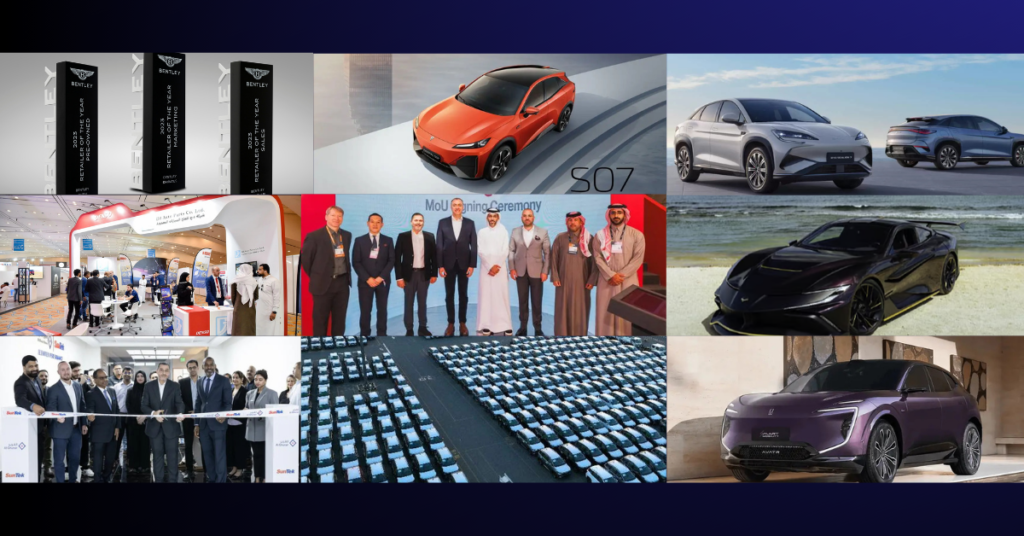
March 2025 was a pivotal month for the MENA automotive industry. With significant OEM decisions, dealership achievements, EV infrastructure expansion, and major vehicle launches, the region has made a strong case for its increasing influence on the global stage. Below is a comprehensive update on the most notable events shaping the sector. 1. Key Events in the MENA Automotive Industry 🚘 Tesla to Enter Saudi Arabia: Tesla confirmed its long-awaited entry into Saudi Arabia by April, a landmark move signalling the Kingdom’s rising EV readiness and market appeal. 🚘 Saudi Arabia’s Dealership Ranking Initiative: The Saudi Ministry of Commerce published its first dealer ranking list. Abdul Latif Jameel ranked highest, with over 27,000 customers on a waitlist. Al-Naghi, Petromin, and Al-Juffali followed. The initiative aims to boost service standards Kingdom-wide. 🚘 Automechanika Riyadh Preparations: Set for April 28–30, the region’s largest aftermarket trade event will feature 450+ exhibitors from 32 countries, underlining Saudi Arabia’s emergence as a regional mobility hub. 2. Noteworthy Vehicle Launches in the MENA Region 🚘 Nissan Magnite Debuts in UAE and KSA: The compact SUV made its first LHD debut in the region, targeting tech-savvy urban drivers with competitive pricing. 🚘 Bentley Bentayga S Black Edition Unveiled in UAE: Launched at the Dubai Polo Gold Cup, this limited-edition luxury SUV reflects growing demand for ultra-luxury, performance-oriented models. 🚘 The Naran Hypercar Debuts in Dubai: British marque Naran Automotive introduced its $2.1M bespoke hypercar, with only 39 units available globally. 🚘 Chinese Brands Make Big Moves: * BYD SEALION 7 debuted via Al-Futtaim in the UAE. * Deepal, a Changan-backed brand, entered via Al Tayer Motors. 3. Strategic Initiatives and Partnerships 🚘 Oman Forms Automotive Committee: A dedicated industry body was created to modernise regulations, support investors, and fuel sectoral growth. 🚘 Al-Futtaim Becomes BYD Strategic Investor: Strengthening its alliance, Al-Futtaim joined BYD’s financing round to accelerate sustainable mobility solutions across the Gulf. 🚘 Saudi & UAE Expand EV Infrastructure: * EVIQ signed an MoU to install 5,000 fast chargers across Riyadh by 2030. * SMI enhanced REEV offerings like the AVATR 07 for UAE customers with long commutes and off-grid needs. 🚘 Lumi Launches Tabuk Service Megacentre: Now one of Saudi Arabia’s largest, the facility supports Vision 2030’s ambitions in mobility and local capability. 🚘 Qatar Insurance & Alfardan Automotive MoU: This collaboration aims to digitalise insurance and mobility services for Qatari consumers. 4. Retail & Customer Experience Milestones 🚘 Bentley Emirates Wins Five MEIA Awards: At the 2024 MEIA Regional Dealer Conference, Bentley Emirates was honoured for sales, marketing, and performance across Abu Dhabi and Dubai. 🚘 AGMC Launches Flagship BMW & MINI Facility in Sharjah: Spanning over 35,000 sqm with 36 service bays, this site redefines the premium car-buying and aftersales experience. 🚘 Al Masaood Opens Renault Showroom in Abu Dhabi: A fully digitised retail concept aligned with Renault’s global CI was launched on Airport Road. 🚘 Al Ghurair Unveils SunTek Car Care in Dubai: This advanced facility offers infrared and ceramic protection, meeting demand for premium car care. 🚘 DP World Records 53.6% Automotive Volume Surge: Jebel Ali Port processed nearly 960,000 ro-ro units in 2024, reinforcing Dubai’s role as a global trade and re-export hub. 5. Global News with Local Relevance 🚘 BYD Achieves Record Profits and Ultra-Fast Charging Milestone: The brand reported 73% YoY net profit growth and unveiled 1MW-capable charging tech delivering 400km range in 5 minutes. 🚘 Volvo Unveils ES90 Sedan: Featuring 800-volt architecture and 435-mile range, this model showcases the next frontier of Scandinavian EVs. 🚘 Nissan Leadership Shake-up: Ivan Espinosa was appointed as CEO amid plans to slash product development times and push new electrified SUVs. AMENA – Your Trusted Partner in MENA Automotive Growth At AMENA, our mission is to transform MENA’s automotive ecosystem through strategic consultancy, best-in-class training, and customer experience excellence. Whether you’re scaling EV initiatives, enhancing CSI/NPS, or seeking aftersales optimisation, our regional expertise ensures results. Partner with AMENA to shape the future of automotive in the Middle East. Follow us @ Linkedin | Youtube| Instagram | Facebook This article is compiled from publicly available information, official press releases, and credible industry sources. All referenced trademarks, photos, brand names, and company logos belong to their respective owners. Any excerpts, statistics, or insights are attributed to their original sources, as cited within the article. The content is presented for informational and educational purposes, in alignment with fair use principles, and does not claim ownership over third-party materials. If you are a copyright holder and believe any content requires revision or removal, please contact us at office@amenaauto.me.