

From the Emirates to the World: What Moved the Auto Industry in September 2026
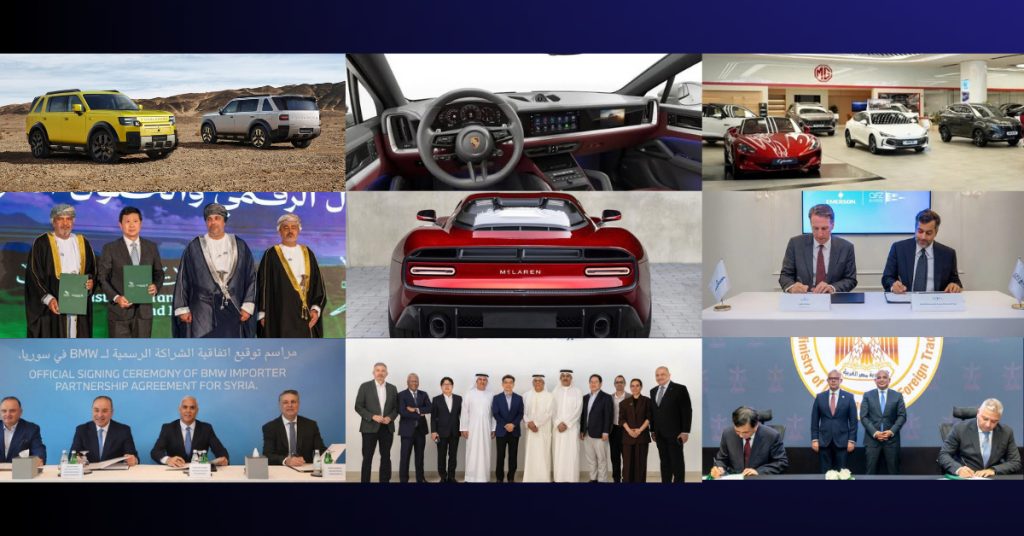
Chinese carmakers had another strong month. They took a record 12% of new car sales in Europe in August, mostly through hybrids, which avoid the steep EU tariffs on battery electric models. In Southeast Asia, PwC figures show Thailand leading the shift to electrified vehicles, with sales up 47% in the first half of the year. Bentley revealed the Torcal, its first fully electric car, and Range Rover finally launched its first BEV. General Motors introduced an all-new 8.3-litre Duramax diesel for its heavy-duty pickups. Toyota set out plans to deploy 400,000 factory robots from 2028. Xpeng and Lucid are both heading to the Paris Motor Show in October. Closer to home, ROX has started building vehicles in Abu Dhabi, Freelander chose the UAE for its global debut, and Kia has named new distributors in Dubai and Abu Dhabi. Thailand Leads ASEAN-6 Electrified Sales With 47% Rise Thailand’s electrified vehicle sales rose 47% to 206,000 units between January and June 2026. That is the highest figure among the six ASEAN markets tracked by PwC. Vietnam followed with 127,000 units and Indonesia with 114,000. Electrified models took 32% of total sales across the six markets. In Thailand, the electrified share reached 53%, up from 32% two years earlier. Battery electric sales grew by around 84%. Overall Thai vehicle sales rose 15%, ahead of 11% for the wider region. Chinese automakers lifted their ASEAN-6 share to 16%, from around 11% in 2025. Competitive pricing, broader ranges and local assembly drove the gain. PwC expects a new Thai excise tax regime to trigger consolidation, particularly among Chinese brands. It forecasts ASEAN-6 light vehicle output to approach six million units by 2030. CATL Opens Largest Battery Service Centre Outside Asia in Oslo CATL has opened its largest Ning Service battery centre outside Asia, in Oslo. The 8,000m² site offers battery diagnostics, repair and life extension. It will serve Norway and neighbouring Nordic markets. The location reflects the maturity of the Norwegian market. Battery electric models took 98.7% of new car registrations in Norway in August. Ning Service is CATL’s aftermarket business, covering maintenance, testing, repair, second-life use, insurance and recycling. It says complex repair times have been cut from 72 hours to 48. The Oslo site will also be the main Nordic training hub, with 14 instructors. The centre is run in partnership with YES-EU Group. As Norway’s EV fleet ages, battery repair is becoming a larger revenue opportunity. Ning Service already operates 1,394 locations in 85 countries and regions, and targets 10,000 by 2030. PwC Survey Finds Automotive Sector Racing to Adopt AI PwC has published its first Global Automotive Outlook. It expects the share of automotive companies using AI and advanced tools to rise from 47% to 72% by 2030. AI now ranks as the most critical technology, cited by 51% of executives. Battery and electric powertrains follow at 41%. Competition is sharpening the push. Some 46% of executives expect newcomers from technology and energy to become serious rivals within five years. Technology firms are set to overtake industrial manufacturers as the sector’s most important partners. However, investment has not kept pace. Some 73% say manufacturing investment targets productivity, and just 12% say it targets growth. Talent shortages were cited by 51% of respondents. Battery electric models are expected to reach 30% of production within five years, up from 18%. South and Southeast Asia are overtaking Western Europe as priority growth markets. GM Unveils All-New Duramax 8.3-Litre Diesel for HD Pickups General Motors has unveiled an all-new 8.3-litre Duramax turbo-diesel V8. It is GM’s first clean-sheet heavy-duty diesel developed fully in-house. The engine delivers 555hp and 1,230lb-ft of torque. It will power the 2027 Chevrolet Silverado HD and GMC Sierra HD. More than 60% of heavy-duty pickup buyers already choose diesel. GM brands hold most of the segment’s diesel share. The engine will be built at the DMAX plant in Brookville, Ohio, following a US$920m expansion. The trucks also gain electric steering, electronic brake boost and a 412hp 6.6-litre petrol V8. Both engines are paired with an Allison ten-speed gearbox. Properly equipped models can tow up to 38,000lb with a gooseneck. Deliveries to US dealers begin in late 2026. Bentley Reveals Torcal, Its First Fully Electric Model Bentley has revealed the Torcal in London. It is a fully electric SUV and the brand’s fourth model line. It is also the first Bentley without a combustion engine. The Torcal produces up to 888PS and 1,350Nm, the most torque of any Bentley. Two motors draw on an 800V, 113kWh battery for up to 375 miles of range. Around 100 miles can be added in seven minutes at 400kW. The standard model reaches 60mph in 3.3 seconds, whilst the Torcal S does it in 2.8 seconds. Bentley has deliberately capped acceleration and focused instead on ride quality. Fully active suspension, a first for the brand, works with all-wheel steering. A bespoke soundtrack, recorded with live instruments, replaces the engine note. The Torcal will be built in Crewe and will serve as a template for future Bentley models. Nissan Unveils Pixo Electric City Car for Europe Nissan has revealed the Pixo, an A-segment electric city car for Europe. It was developed with Renault. It will be built at Renault’s Novo Mesto plant in Slovenia. The Pixo uses a 27.5kWh lithium iron phosphate battery. It is the first LFP battery in a European Nissan. Range is up to 259km. Charging at 50kW takes it from 15% to 80% in around 28 minutes. Bidirectional charging at 11kW comes as standard. The car is 3,796mm long, produces 60kW and has a 356-litre boot. Equipment includes emergency braking, lane keeping and Google built-in with Gemini. The partnership gives Nissan a faster route into a segment where it had no electric model. Deliveries begin in early 2027, with pricing due from December. Chinese Brands Hit Record 12% of European Car Sales Chinese automakers took a record 12% of new car sales across Europe in August. Hybrids are driving the surge.
From V12s to Vision 2030: August 2026’s Global & Regional Auto Highlights
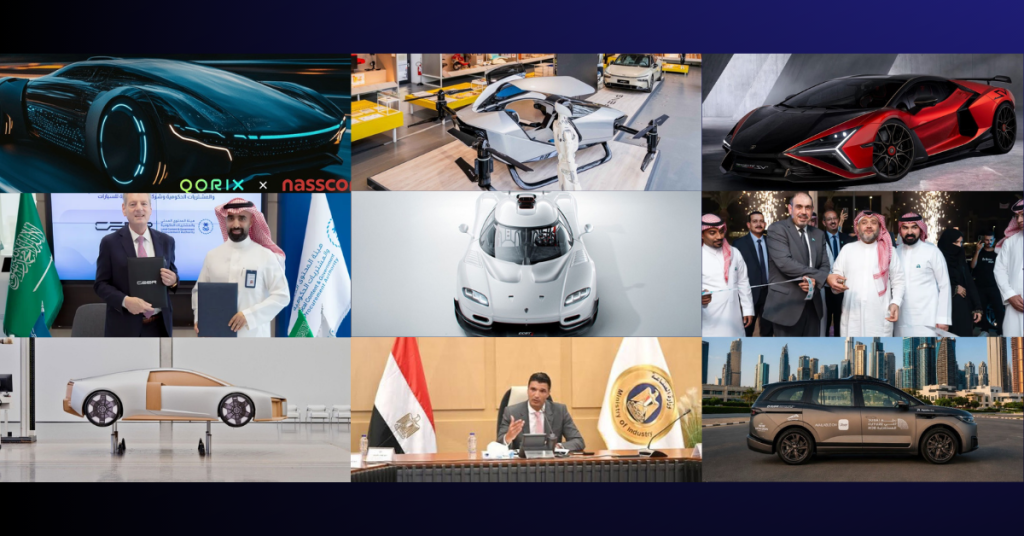
August 2026 was a month where the automotive world moved on every front at once. Waymo revealed its first custom-built robotaxi chip, Koenigsegg unlocked 1,600 horsepower on biofuel, and Lamborghini, Audi and McLaren rolled out some of the year’s most anticipated hypercars. At the same time, Qatar broke ground on its first EV plant, Dubai welcomed fully driverless Apollo Go taxis on Uber, and Chinese brands like Chery and BYD kept rewriting the rules of global expansion. This month’s roundup captures the biggest global and regional automotive stories shaping mobility today — from AI-powered chips and electric hypercars to Middle East manufacturing milestones and dealership network growth across the GCC. Rolls-Royce Extension Project Reaches £300m Milestone Rolls-Royce Motor Cars has opened The Link, an internal road at its Goodwood site. It marks a milestone in the £300 million ($399 million) extension project. The road will halve heavy goods vehicle movements through the ancient hamlet of Maudlin and Westhampnett village. It was formally opened by Jess Brown-Fuller, MP for Chichester. The extension began in 2024. It is the largest single investment at the Goodwood site since it opened in 2003. It is designed to create additional capacity for Bespoke and Coachbuild projects. The new building is scheduled to be fully operational by 2029. Rolls-Royce Motor Cars contributes over £500 million to the UK economy annually. Lamborghini Revuelto SV to Make UK Debut at Salon Privé Salon Privé 2026 will open at Blenheim Palace with the highest number of super and hypercar unveils in its 21-year history, including UK debuts from Lamborghini, Brabus and Giamaro Automobili. Lamborghini will show the Revuelto SV, limited to 1,963 units (a nod to the marque’s founding year), producing 1,065 CV from its V12 hybrid powertrain, accelerating from 0-100 km/h in 2.4 seconds and topping 345 km/h. Brabus debuts the Bodo, a coachbuilt V12 supercar limited to 77 units and capable of 223 mph, alongside the Brabus 800 Cabrio, an AMG G 63-based conversion limited to 50 units. Giamaro Automobili will debut its Krafla hypercar. The Automotive Gallery features 12 coachbuilders, restorers and manufacturers in total. Waymo Reveals Custom Chip Powering Its Robotaxi Fleet Waymo has built its own custom computer chip for its robotaxis for the first time. The application-specific integrated chip uses TSMC’s 5nm process technology. It delivers more than 1,000 TOPS. It processes raw sensor data at the front end of the system. The chip is already in Waymo’s sixth-generation robotaxi, Ojai. The system processes high-fidelity data from 13 high-resolution cameras simultaneously. Waymo runs more than 500,000 paid rides a week across 4,000 vehicles in a dozen US cities. Ojai launched to all riders this week in Los Angeles, Phoenix and San Francisco. Denver, Las Vegas and San Diego are next in 2026. Outside estimates put sixth-generation hardware at US$20,000–25,000 per vehicle. Cinemo In-Car Gaming Uses Dolby Atmos and Haptic Feedback Cinemo, Dolby Laboratories and SmashLabs have partnered to bring music-led gaming into the vehicle cabin. The experience combines SmashLabs’ games with Cinemo’s In-Car Game APIs and Dolby Atmos spatial audio. In-game events are synchronised with vehicle sound, lighting, haptics and climate control in real time. Dolby Atmos moves sound around the cabin in three dimensions. The system supports on-the-move, parked and charging scenarios. The experience is now ready for OEM evaluation. It will be demonstrated live at Gamescom 2026 in Cologne. Solera Adds ADAS Calibration Estimating to Qapter Platform Solera has launched a new ADAS calibration estimating capability within its Qapter collision repair platform. It was developed in partnership with Azimuth Claims Solutions. The tool, ADAS Operations, gives insurers, independent appraisers and multi-shop operators a dedicated breakdown of calibration procedures and labour times. It creates a separate line item decoupling ADAS calibration from vehicle diagnostics. Azimuth’s calibration identification engine and labour time database are integrated directly into Qapter. ADAS sensors, cameras and software modules require precise calibration after collision repairs. The industry has lacked a consistent method for determining what is required. Qapter is used by insurers, appraisers and collision repairers globally. Bentley Debuts Sensory Curation Engine on New Torcal Bentley has introduced the Curation Engine on its new Torcal model, a system that adjusts lighting, sound, climate, air quality and digital information to create four cabin environments based on occupants’ moods. The system draws on sensory neuroscience to calibrate the atmosphere of the entire cabin rather than individual features. Four Experience Modes are offered: Bentley Mode blends comfort and driver focus, Comfort Mode softens lighting with an optional digital detox, Sport Mode sharpens sound and visual cues, and Refresh Mode, exclusive to the Torcal, boosts fresh-air circulation and brightens lighting to combat fatigue on longer journeys. Chery to Open UK Research Centre as Its Sales Surge Chery will open a dedicated R&D centre in the UK later in 2026. It will establish a Centre of Excellence at the UTAC Millbrook proving ground in Bedfordshire. Initial work will focus on tuning chassis dynamics, steering feel and driver-assistance systems for UK conditions. It will later expand into autonomous driving and advanced research. Chinese brands accounted for roughly 15% of new UK car registrations during H1 2026. Chery’s Omoda, Jaecoo and core Chery brands commanded around 7–8% of the UK market by July. The Jaecoo 7 SUV is the country’s best-selling car outright. Chery has surpassed 100,000 cumulative UK sales since its August 2024 launch. It is exploring UK manufacturing at Nissan’s Sunderland plant. A non-binding MoU was signed in June to examine contract assembly. Pirelli Develops Six Tailored Tyres for Porsche Cayenne Electric Pirelli has developed six tailor-made tyre fitments for the first all-electric Porsche Cayenne, engineered through a fully virtual design process. The range includes the fifth generation P Zero, a dedicated P Zero R for the Cayenne Electric Turbo, two winter options and one All Season tyre. Elect technology combines low rolling resistance with dedicated compounds for grip under instant torque and greater vehicle weight, plus improved wear resistance and lower noise. The Cayenne Electric Turbo, which accelerates from 0 to
The Loyalty You Can Build: How Leading MENA Dealers Manufacture Repeat Customers
Loyalty, in most dealerships, is left to chance. The assumption is that if the car is good and the customer was not actively upset, they will come back when the time comes. They usually do not. Real loyalty in the MENA Automotive market is not a happy accident that befalls the lucky. It is manufactured, deliberately, through a sequence of touchpoints that the best operators design on purpose and the rest leave to fate. The encouraging news is that everything in that sequence is within your control. Start from an honest picture of how loyalty actually works in this market, because it is not what the service-bay queue suggests. During the warranty period the customer is captive. They service with you or they forfeit their cover, so their presence tells you nothing about whether they like you. The real test of loyalty arrives at two specific moments: the warranty cliff, when they are finally free to service anywhere, and the repurchase or trade-in decision. A customer who has been merely processed for the duration of the warranty has no reason to stay at either moment. A customer who has been genuinely looked after has every reason. The entire discipline of loyalty is about earning those two decisions long before they arrive. The mistake is to think loyalty is won at the dramatic moments. It is won at the routine ones, the handover that felt like a beginning rather than the end of a transaction, the service visit where someone remembered the customer and explained the work plainly, the message that arrived because it was useful rather than because something was being sold. These moments seem small. Strung together with intent, they are the entire relationship. Leading dealers treat the handover as the opening of a relationship, not the closing of a sale. They make the first service feel anticipated rather than chased. They communicate proactively about what the vehicle needs and when, so the customer feels guided rather than processed. None of this is expensive. It is simply designed, and the design is what separates the dealers who keep customers from the dealers who merely sell to them once. The post-warranty transition is the test you can prepare for Because the warranty cliff is where loyalty is proven, it is also where it is most often lost through sheer neglect. The customer reaches the end of their warranty, suddenly free to go anywhere, and the dealer who took their captive servicing for granted has given them no reason to stay. The leading operators treat the approach of the warranty cliff as a deliberate retention moment. They reach out before it arrives, not after. They make the case for staying, through a service plan, a genuine relationship and a standard of care the independents cannot match. They understand that a customer kept past the warranty cliff is a customer who chose them, and that choice is worth more than any number of compelled visits that came before it. The repurchase moment rewards the groundwork The other decisive moment is the next vehicle. In an exclusive-franchise market, a customer who defects does not move to another dealer of the same brand, there is no other. They move to a different make entirely. So the repurchase moment is where a year of small touchpoints either pays off or evaporates. The dealers who win it have stayed present and useful throughout the ownership cycle, know when the customer is approaching a replacement, and arrive with a relevant offer and an existing relationship rather than a cold pitch. They have made staying the easy choice and leaving the effortful one. What manufacturing loyalty actually requires None of this is sentiment. It is operational discipline, and it rests on a few capabilities most dealerships can build. Data that is used, not just collected. Knowing who the customer is, what they drive, when they are due and where they are in the ownership cycle, and acting on it. A CRM full of untouched records is not a loyalty engine. Proactive, useful communication. Contact that helps the customer rather than chases the sale. Reliability of communication builds trust, and trust is what survives to the repurchase. Designed moments, not default ones. A handover, a first service and a warranty-cliff conversation that have been deliberately shaped to strengthen the relationship, rather than left to whoever happens to be on shift. Accountability for retention. Someone owns the loyalty of the customer base as a measurable outcome, the way someone owns sales volume. What is owned improves. What is assumed decays. Loyalty is not a personality trait your customers either have or lack. It is the predictable result of a sequence you either build or neglect. The dealers who manufacture repeat customers are not luckier or better loved. They simply decided that loyalty was too important to leave to chance, and engineered it. So can you. About AMENA Auto Manufacturing loyalty is exactly the work AMENA Auto does with OEMs, importers and dealers across the GCC, North Africa and the wider MENA region. We help operators design the moments that matter — the handover, the first service, the warranty-cliff conversation, the repurchase approach — and build the CRM discipline, mystery shopping, CSI and NPS programmes, and AI-powered monitoring that hold them to a standard. Retention stops being a hope and starts being a number someone owns. That is how we help our clients Find More, Win More, Keep More. Let’s talk. To find out how AMENA Auto can help your business manufacture loyalty and turn retention into a measurable outcome, visit www.amenaauto.com or contact our team directly. Contact Us Today! At office@amenaauto.com Follow us @ Linkedin | Youtube| Instagram | Facebook We express our sincere gratitude to all the veterans and experienced professionals in the automotive industry for their valuable input and advice when we write our articles. We take pride in our commitment to embracing technology, including AI, to enhance the quality of our articles.
Wheels, Wings & AI: July 2026’s Biggest Automotive Breakthroughs
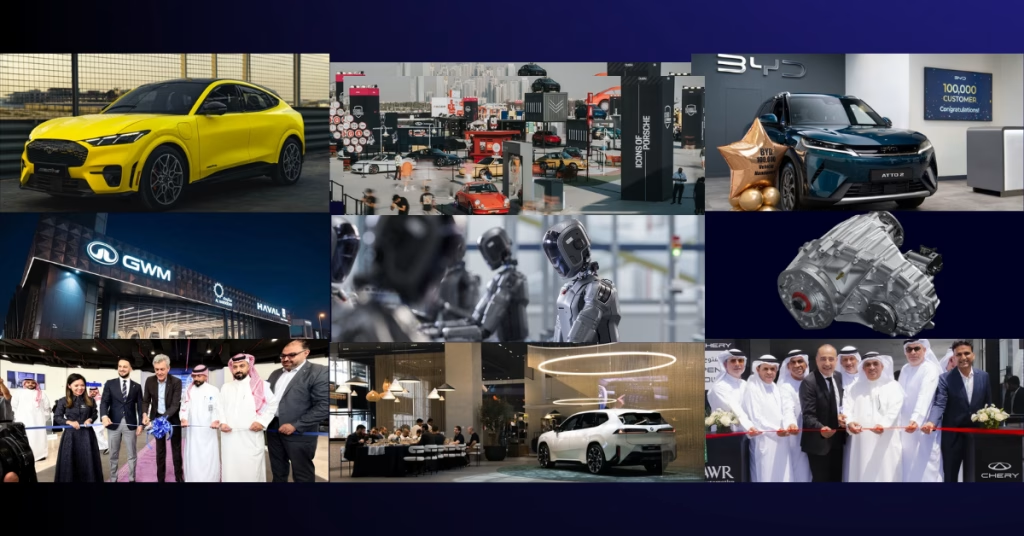
July 2026 was one of the most consequential months of the year for the automotive industry, globally and across MENA. Billion-dollar semiconductor deals, sovereign AI programmes, breakthrough autonomous driving frameworks, and a fresh wave of electrified launches all pointed to an industry being rewritten by software, AI, and electrification at record speed. Globally, onsemi, Toyota, BMW, Honda, Renault, BYD, Nissan, and Audi advanced bold moves across Physical AI, eVTOL manufacturing, next-generation EVs, and generative-AI cabins, while Chinese innovators like Xpeng and Yanfeng pushed further into world-model autonomy and intelligent cabin design. Across MENA, WeRide earned global recognition for its UAE robotaxi operations, Stellantis sharpened its FaSTLAne 2030 execution, Egypt edged closer to becoming an export hub, and Saudi Arabia’s CEER marked a milestone in homegrown EV talent — with Chery, GWM, DENZA, Jetour, Ford, Suzuki, BMW, and Hyundai adding new models, showrooms, and partnerships that reinforced the region’s rising strategic weight. onsemi Acquires Synaptics in US$7bn AI Chip Deal onsemi has agreed to acquire edge AI chip firm Synaptics in an all-stock deal worth approximately US$7bn, adding connected compute and human-machine interface capabilities central to the next generation of automotive intelligent systems. The transaction implies a fixed exchange ratio of 1.350 onsemi shares per Synaptics share, roughly a 19% premium on 10-day volume-weighted average prices. The combined portfolio is intended to position onsemi across four pillars of Physical AI: power, sense, connected compute and control, with autonomous driving cited as a primary target application. Synaptics’ Astra platform adds purpose-built AI processors and neural processing units alongside wireless connectivity. The deal is expected to close in mid-2027. The transaction is one of the largest automotive semiconductor deals of the year and signals ongoing consolidation across the Physical AI chip market. It strengthens onsemi’s ability to compete with Nvidia, Qualcomm and NXP for high-value ADAS and cabin AI content. Noetra Launches Japan Sovereign AI Model Programme Noetra Corp. has launched full-scale R&D for a multimodal AI foundation model aimed at physical AI and robotics. Founding members include Sony, SoftBank, NEC, and Honda Motor. The sovereign AI programme has drawn investment from 44 companies, led by Japan’s manufacturing sector. The development roadmap runs across three phases, targeting Real-world Native AI for physical environments by fiscal 2030. Computing infrastructure will be built with Nvidia, comprising approximately 27,500 Rubin GPUs, with construction starting April 2027. Honda’s founding membership gives the programme a direct automotive stake in applying manufacturing expertise to physical AI for mobility and robotics. Toyota and Joby Aviation Form eVTOL Manufacturing JV Joby Aviation and Toyota Motor Corporation have formalised their manufacturing partnership through a joint venture, combining Joby’s electric vertical take-off and landing expertise with Toyota’s production systems to advance commercial production. Toyota has supported Joby for nearly a decade, and the JV formalises that relationship as a shared manufacturing structure. The alliance will focus initially on productivity, quality and cost improvements across Joby’s eVTOL production process. The deal marks Toyota’s most direct operational commitment to the eVTOL sector, moving from investor to manufacturing partner as Joby prepares for aircraft certification and anticipated demand growth. The partnership signals Toyota’s intent to embed itself in the advanced air mobility supply chain as it takes shape commercially. It also strengthens Joby’s credibility with regulators and launch customers as it scales toward high-volume aircraft production. Xpeng Releases X-Mind World Model for Autonomous Driving Xpeng has released X-Mind, a framework embedding predictive world model capabilities into autonomous driving systems that lets vehicles simulate near-term environmental changes before committing to an action. Presented at the computer vision and pattern recognition conference in Denver, it completes Xpeng’s three-pillar Physical AI research programme alongside X-World and X-Foresight. Rather than the conventional reactive perception-to-action loop, X-Mind introduces a visual chain of thought that runs a spatial-temporal simulation before any action is generated. In comparative testing, X-Mind reduced lateral and longitudinal displacement error against conventional models, with gains concentrated in complex long-tail scenarios. The release underscores Xpeng’s ambition to compete with global leaders in end-to-end autonomous driving stacks. It also positions the company to accelerate deployment of higher-level autonomy across its consumer vehicles and forthcoming robotaxi programme. BMW Builds Long-Wheelbase X5 and iX5 Just for China BMW will sell long-wheelbase versions of the X5 and the new iX5 exclusively in China, with a wheelbase of 3,165mm—130mm longer than the X5 sold elsewhere. Launch is set for 2027, and the electric iX5, which uses sixth-generation BMW eDrive technology, claims more than 1,000km of range on the China light-duty vehicle test cycle. The driver assistance system is the more significant departure. BMW has developed it with the Chinese firm Momenta, using end-to-end AI trained locally, and pairs it with the Heart of Joy central computer for address-to-address assistance. Both cars carry adaptive two-axle air suspension as standard. For the first time, BMW will sell a combustion X5 in China alongside a fully electric sibling. The cabin runs BMW Panoramic iDrive on Operating System X, with an updated BMW Theatre Screen adding 8K streaming, gaming and video calling in the rear. Mitsubishi Motors Teases All-New Pajero for Autumn Debut Mitsubishi Motors has announced an all-new Pajero cross-country SUV for a global debut this autumn, engineered for off-road performance across diverse terrain and weather conditions. The model features a Multi Meter digital display inherited from earlier Pajero generations, offering live readouts of altitude, compass heading, pitch and roll angles, and left-right torque distribution. The system is designed for use across steep inclines, forest trails, rocky surfaces and muddy ground. In a segment where lifestyle crossover styling has grown prominent, Mitsubishi’s decision to lead with terrain-focused functional capability signals a clear strategic intent. The vehicle will carry the Montero name in some markets. The revived nameplate anchors Mitsubishi’s global brand positioning around 4WD authenticity as it looks to differentiate against increasingly car-like rivals. Its return also comes as demand for capable body-on-frame SUVs strengthens across the Middle East, Latin America and Australia. Faraday Future Takes Its EAI Robots to Silicon Valley Faraday Future Intelligent Electric
The First 90 Days: How to Onboard a New Car Salesperson So They Actually Sell
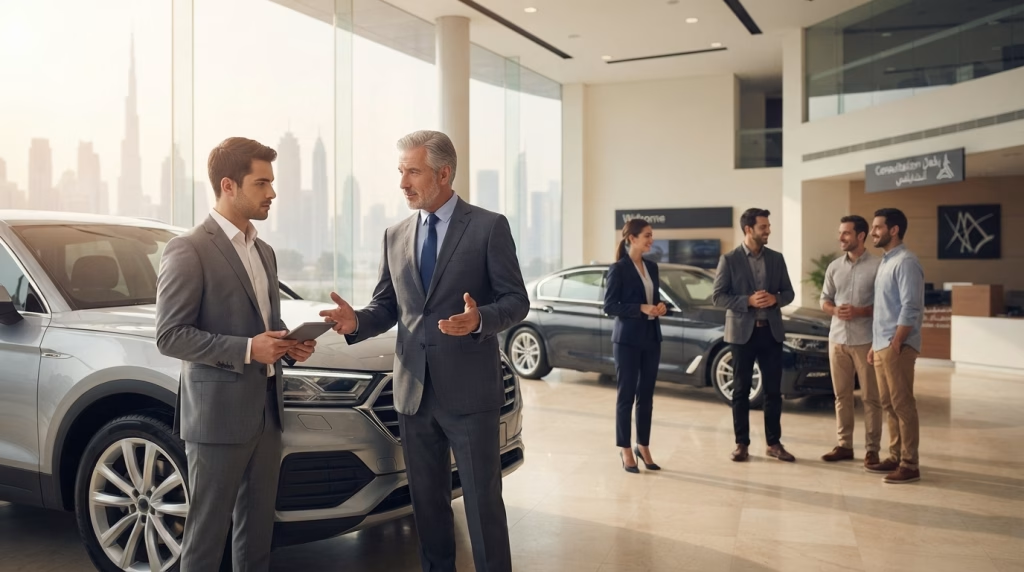
Across the MENA region, Dealers/Importers are hiring. Networks are expanding, new brands are arriving with new showrooms to staff, and the competition for capable salespeople is fierce. Yet most dealerships invest enormous effort in recruiting a salesperson and almost none in the thing that actually determines whether that hire succeeds: the first ninety days. A new salesperson is handed a badge, pointed at the showroom floor, and left to sink or swim. Most sink, slowly and expensively, and the dealer concludes they hired the wrong person. Usually they did not. They onboarded them badly, or not at all. The cost of this is larger than it looks. A salesperson who flounders for months before leaving has consumed recruitment cost, management time and, most expensively, a stream of customers who walked into a high-intent showroom and met someone not yet equipped to sell to them. In an exclusive-franchise market, where every walk-in is a serious buyer who chose to visit and a lost one defects to a different brand entirely, an underprepared salesperson on the floor is not a training inconvenience. It is lost sales handed to competing manufacturers, day after day, while the new hire learns on live customers. Why sink-or-swim fails The sink-or-swim approach rests on a flawed assumption: that selling cars is a talent you either have or lack, and the floor will quickly reveal which. In reality, modern Automotive selling is a structured discipline, product knowledge, process, qualification, objection handling, follow-up and, increasingly, the ability to build confidence in brands the customer does not yet trust. None of that is absorbed by osmosis from standing near experienced colleagues. Thrown in unprepared, even a naturally capable salesperson develops bad habits, loses winnable deals, and has their early confidence eroded by a string of failures that a structured start would have prevented. What the first 90 days should actually build A deliberate onboarding programme is not a one-day induction followed by abandonment. It is a structured ninety-day arc that builds capability in a sensible order and supports the new hire through their earliest real customers. Product mastery first. The salesperson must know the range deeply, not superficially, because in a market increasingly defined by newer brands, the salesperson’s own command of the product is a primary trust signal. Hesitation reads as doubt about the brand itself. Process and qualification, taught explicitly. How this dealership sells, how to qualify, how to run discovery before product, how to follow up. These are teachable steps, and leaving them to be guessed at is where most early failure originates. Brand confidence, deliberately coached. For any dealer carrying a newer or less-established brand, the new salesperson must be equipped to build belief the badge has not yet earned. This is the hardest part of the modern sell and the most neglected in onboarding. Supported live selling, not abandonment. Early customers handled with coaching, observation and feedback, so the new hire learns from real interactions with a safety net, rather than developing bad habits unobserved. The role of measurement and feedback The ninety days should be a period of close observation, not silent assessment. The best operators watch how the new salesperson actually performs with customers, through structured coaching and tools such as mystery shopping, and feed back continuously, correcting early and reinforcing what works. The goal is not to judge whether the hire will make it, but to actively make them. A new salesperson who receives specific, frequent, constructive feedback in their first ninety days becomes productive far faster, and far more reliably, than one left to discover everything alone. Onboarding as competitive advantage In a market where everyone is competing for the same scarce sales talent, the dealer who onboards well has a genuine edge. They get their hires to productivity faster, they retain them longer because early success breeds commitment, and they protect the high-intent customers who would otherwise have been lost to an underprepared rookie. The dealer who onboards badly pays three times over, in lost sales, in wasted recruitment, and in the eventual departure of a salesperson who might have thrived with a better start. The first ninety days are not an administrative formality to get through before the real work begins. They are the real work, the period that determines whether an expensive hire becomes a productive asset or an expensive lesson. In a hiring market this competitive, the dealers who treat onboarding as seriously as recruitment will build the strongest sales teams in the region. The ones who keep throwing new hires onto the floor and hoping will keep wondering why they cannot find good people, when the truth is they cannot keep them. AMENA Auto AMENA Auto is the leading Automotive consultancy and training partner for OEMs and Dealers/Importers across the MENA region. From sales and aftersales optimisation to parts efficiency, F&I performance, used vehicle strategy, CSI and NPS programmes, and structured mystery shopping, we work with operators across the GCC, North Africa, and the wider region to convert commercial intent into measurable performance. Our consulting, training, mystery shopping, and AI-powered monitoring are built around one operating philosophy: Find More, Win More, Keep More. Let’s talk. To find out how AMENA Auto can help you turn the first ninety days into your strongest competitive advantage, visit www.amenaauto.com or contact our team directly. Contact Us Today! At office@amenaauto.com Follow us @ Linkedin | Youtube| Instagram | Facebook We express our sincere gratitude to all the veterans and experienced professionals in the automotive industry for their valuable input and advice when we write our articles. We take pride in our commitment to embracing technology, including AI, to enhance the quality of our articles.
What a Great MENA Service Experience Actually Looks Like
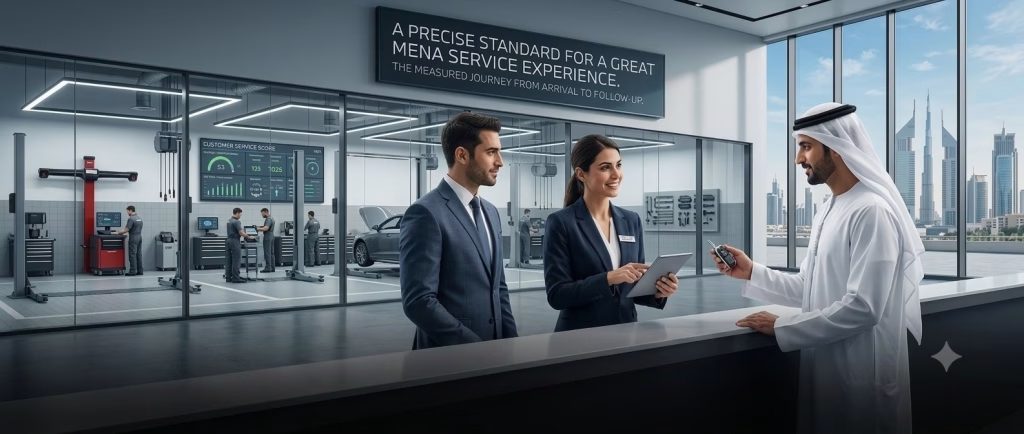
Ask ten Dealers/Importers what a great service experience looks like and you will get ten vague answers, most of them some version of friendly staff and a clean waiting area. That is not a standard. It is a hope. The dealers who genuinely excel at aftersales in the MENA region have a precise, demanding and deliberately designed picture of what good looks like at every stage of the service journey, and they measure themselves against it relentlessly. This is that benchmark, set out plainly, so you can hold your own operation against it. It matters more than ever in 2026 because the service experience is no longer judged against other dealers alone. Customers now carry the expectations set by every excellent service business they deal with, their bank, their airline, their favourite app. A car service that feels clunky, opaque or indifferent does not just underperform against the dealer down the road. It underperforms against the customer’s entire idea of what good service feels like. The bar has been raised by the whole economy, and the service drive has to meet it. And the stakes are higher than a single review, because in our market the service experience is what determines whether the captive warranty customer stays once they are finally free to leave, or walks the moment the warranty ends. Every weak service visit is a small deposit toward a defection that will only become visible at the warranty cliff. Before the visit: effortless and proactive Great service begins before the customer arrives. Booking is simple, available through the channels the customer uses, and confirmed clearly. Better still, the dealer is proactive, reaching out when a service is due rather than waiting to be chased, so the customer feels guided through ownership rather than left to manage it alone. The experience that starts with the customer struggling to get through on the phone has already lost ground it will struggle to recover. At reception: recognised, not processed The arrival sets the tone. In a great operation the customer is expected, greeted by name, and met by someone who already knows their vehicle and history rather than starting from a blank screen. The work to be done is explained in plain language, the cost is made clear before it is incurred, and the customer leaves the service desk understanding exactly what will happen and when. The contrast is the all-too-common experience of being processed, handed a form, given a vague estimate and left uncertain. Recognition and clarity at reception are not luxuries. They are the foundation of trust for everything that follows. During the work: transparent and communicative The period when the car is in the workshop is where trust is most often won or quietly lost. In a great experience, the customer is kept informed, particularly if something changes, an additional issue found, a delay, a revised cost. Nothing erodes trust faster than a surprise at collection, and nothing builds it faster than proactive, honest communication during the work. The customer should never have to wonder what is happening to their vehicle or their bill. The dealer who communicates as though the customer’s time and money matter is the dealer the customer remembers. At handback and after: closing the loop The collection is not the end of the experience, it is the moment that determines whether the customer leaves reassured or uneasy. The work is explained, the invoice contains no surprises, and the vehicle is returned clean and ready. Then, crucially, the loop is closed afterwards, a follow-up that checks the customer was satisfied and reinforces that the relationship continues beyond the transaction. This is also where the honest dealer learns the truth, because a structured follow-up surfaces the small dissatisfactions that would otherwise go unspoken and quietly drive the customer away at the warranty cliff. The standard behind the standard What separates the operations that achieve this from those that aspire to it is not intention. Everyone intends to deliver good service. The difference is measurement and accountability. The leading dealers define the standard precisely, then verify it against the experience customers actually receive, not the one the brand assumes they receive. This is exactly where mystery shopping earns its place, capturing the real journey, stage by stage, and exposing the gap between the designed experience and the delivered one. Without that measurement, a service standard is just a poster. With it, it becomes a discipline. A great MENA service experience in 2026 is effortless to begin, personal at reception, transparent through the work, reassuring at handback and continuous afterwards. None of it is exotic, and none of it is beyond any serious operation. What it requires is the decision to define the standard precisely and the discipline to measure against it honestly. Define it, measure it, and you will not only keep more customers past the warranty cliff. You will be the benchmark others are measured against. AMENA Auto AMENA Auto helps Dealers/Importers across the MENA region define and deliver a service experience worthy of the benchmark. Through aftersales and customer experience consultancy, mystery shopping that captures the real customer journey stage by stage, CSI and NPS programmes, and service and parts training, we help operators close the gap between the experience they designed and the one customers actually receive and turn service excellence into post-warranty retention. To Find More, Win More and Keep More. Let’s talk. To find out how AMENA Auto can help you turn your service drive into the profit engine of your business, visit www.amenaauto.com or contact our team directly. Contact Us Today! At office@amenaauto.com Follow us @ Linkedin | Youtube| Instagram | Facebook We express our sincere gratitude to all the veterans and experienced professionals in the automotive industry for their valuable input and advice when we write our articles. We take pride in our commitment to embracing technology, including AI, to enhance the quality of our articles.
Aftersales: The Most Reliable Profit Engine in Your Business
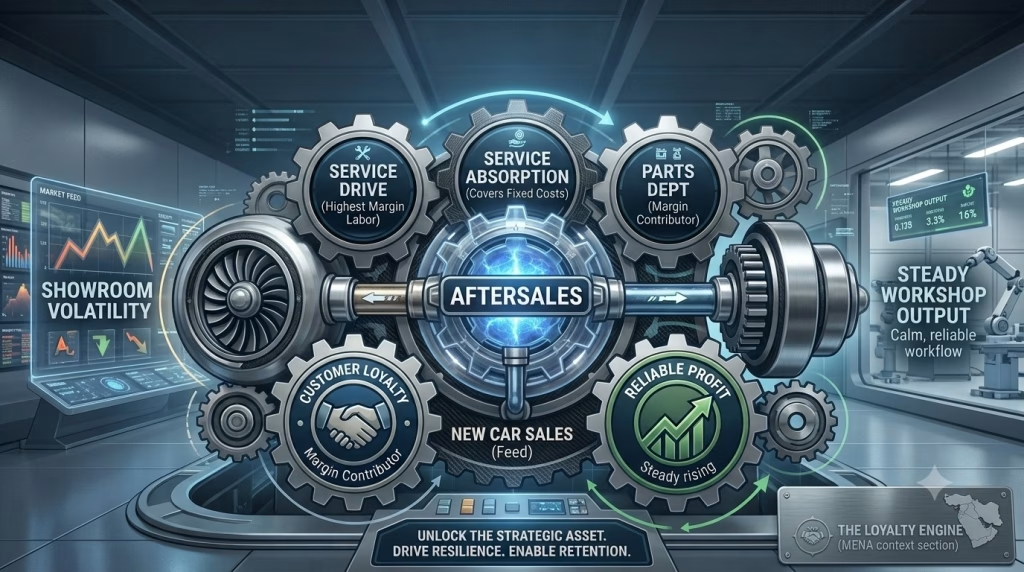
In most dealerships, the showroom gets the attention and the service drive gets the leftovers. The sales floor is where the energy goes, where the targets are watched and where leadership spends its day. Aftersales, by contrast, is treated as the quiet, unglamorous back of the business. This is one of the most expensive habits in the industry, because aftersales is, for most Dealers/Importers, the steadiest, highest-margin and most loyalty-building activity in the entire operation. The dealers who understand this do not treat the service drive as a cost centre that supports sales. They treat it as the profit engine that sales exists to feed. Consider the contrast in reliability. New car sales are cyclical, exposed to economic swings, currency, supply, incentives and competition that can erode margin to almost nothing in a difficult year. Aftersales is structurally steadier. Every car sold is a future stream of service, parts and repair work, and that work continues whether the new car market is booming or flat. When the showroom slows, the service drive keeps turning. A business with a strong aftersales operation has a stabiliser that the pure pursuit of new car volume can never provide. The margin reality The financial case is straightforward and too often ignored. Service labour and parts typically carry far stronger margins than new car sales, where competition and price transparency have compressed profitability for years. A well-run aftersales operation can carry a substantial share of the dealership’s entire fixed cost base, the principle long understood by the best operators as service absorption. The higher that absorption, the less the business depends on the volatile fortunes of new car sales to survive. In other words, aftersales does not just make money. It makes the whole business more resilient. That is a strategic asset, not a back-office function. The parts department deserves a particular mention here, because it is the most overlooked profit centre of all. Parts is not merely a support function for the workshop. Managed well, with the right inventory strategy, availability discipline and pricing, it is a margin contributor in its own right and a critical enabler of customer retention, because nothing drives a customer toward an independent faster than a franchise that cannot supply or fit the part their vehicle needs without an unreasonable wait. Parts efficiency and aftersales profitability are inseparable, and the dealers who treat the parts operation as strategically as the workshop capture value the rest leave on the shelf. The loyalty engine, with one MENA caveat Aftersales is also where customer loyalty is built or lost, but the way it works in our market deserves precision. During the warranty period, the customer is captive. They service with the franchise or they forfeit their cover. That guarantees the work, but it also means in-warranty service visits are compelled, not chosen, and a dealer who reads a full service bay as proof of loyalty is misreading obligation as affection. The real prize is what happens at the warranty cliff. A customer who experienced genuine care, transparency and competence throughout the warranty period stays when they are finally free to leave. A customer who was merely processed walks the moment the compulsion ends, taking their service revenue, and eventually their next car, with them. Aftersales done well is the single most powerful tool a dealer has for surviving the warranty cliff with the customer relationship intact. Why it is underexploited If aftersales is so valuable, why is it so often neglected? Partly because the warranty-captive customer creates a false sense of security, the work arrives regardless, so the urgency to excel never registers. Partly because leadership attention and talent gravitate to the visible drama of the sales floor. And partly because aftersales excellence is unglamorous, built on capacity management, technician capability, parts availability, advisor communication and process discipline rather than on a single dramatic close. It is a game of consistency, and consistency is easy to underinvest in precisely because it does not announce itself. How the best operators maximise it The dealers who treat aftersales as the profit engine it is share a set of habits. They manage capacity and throughput deliberately, treating workshop time as the valuable, finite resource it is, and refusing to leave revenue stranded in inefficiency. They invest in parts availability and technician capability ahead of need, because a customer turned away or kept waiting is a customer learning to look elsewhere for the day they are free to. They make the service experience transparent and communicative, because trust built at the service desk is what survives to the warranty cliff and the next purchase They measure and own aftersales retention as a strategic number, especially post-warranty retention, the truest signal of whether the loyalty was real. The showroom will always have the glamour. But the dealer who builds the business around the reliability, margin and loyalty of a great aftersales operation is building on far firmer ground. When the next difficult year arrives, and one always does, it is the service drive that keeps the lights on. Treat it that way, and it will repay the respect many times over. AMENA Auto AMENA Auto helps Dealers/Importers across the MENA region build aftersales operations that perform as the profit engine of the business. Through consultancy on service and parts efficiency, capacity and throughput, technician capability and aftersales process design, plus customer experience, CSI and NPS programmes and mystery shopping, we help operators raise service absorption, strengthen post-warranty retention and turn the service drive into a durable competitive advantage. To Find More, Win More and Keep More Clients. Let’s talk. To find out how AMENA Auto can help you turn your service drive into the profit engine of your business, visit www.amenaauto.com or contact our team directly. Contact us today at office@amenaauto.com Follow us on Linkedin | Youtube| Instagram | Facebook We express our sincere gratitude to all the veterans and experienced professionals in the automotive industry for their valuable input and advice when we
Multicultural Sales Training for MENA’s Diverse Buyers: The Multilingual Showroom
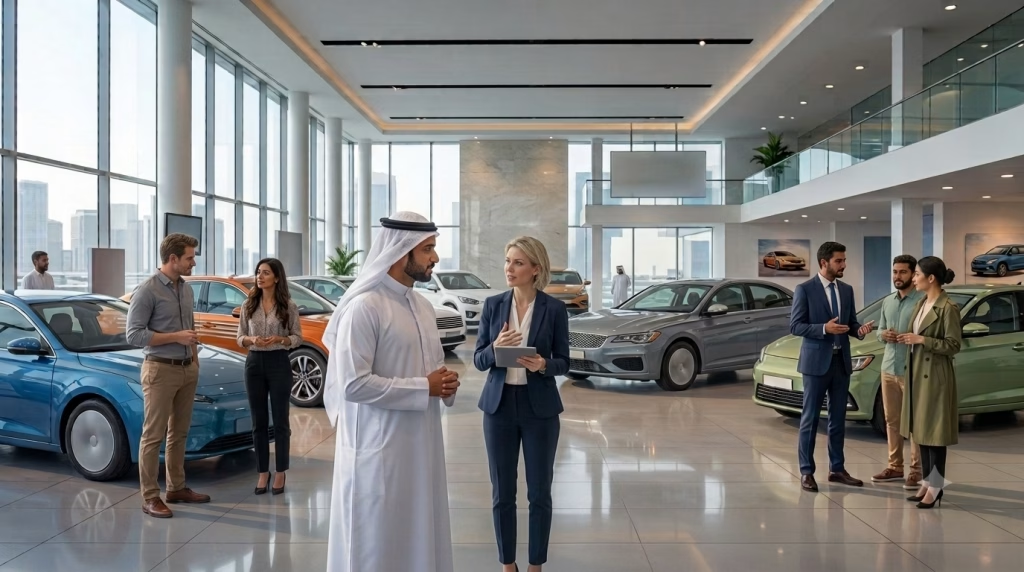
The Multilingual, Multicultural Showroom: Training Sales Teams for MENA’s Diverse Buyers There is no such thing as the average customer in a MENA showroom, and yet most sales training is built as though there is. In a single day, a salesperson in the region might serve an Emirati or Saudi national, a long-settled Western expatriate, a South Asian professional buying their first car in the country, an Arab visitor from a neighbouring market and a recently arrived worker navigating an unfamiliar system. They will span different languages, different cultural expectations, different relationships with money and negotiation, and different ideas of what good service even means. To sell to all of them with one rehearsed approach is to sell well to none of them. The diversity of the MENA buyer is one of the region’s defining commercial realities, and remarkably few dealers train for it deliberately. This is not a soft, nice-to-have dimension of selling. It is a hard commercial one. A salesperson who cannot read and adapt to the cultural context of the person in front of them will misjudge the pace of the conversation, the role of price, the importance of relationship, the appropriate degree of directness, and a dozen other signals that determine whether trust forms or fails to. The cost shows up directly in conversion. In a market this diverse, cultural fluency is not etiquette. It is sales capability. Language is the entry point, not the whole of it Language matters, and the multilingual showroom has an obvious practical advantage. A customer who can conduct the most important purchase decision of their year in the language they think in, rather than struggling in a second or third one, is a customer who feels understood and in control. A team that collectively covers the languages of its market removes friction at the most sensitive moment of the sale. But language is only the entry point. A salesperson can share a customer’s language and still completely misread their culture, and it is the cultural misread, not the linguistic one, that quietly loses the sale. Culture is where the sale is won or lost Different customers bring genuinely different expectations to the showroom, and the skilled salesperson reads and adapts to them rather than applying a single template. For some buyers, the relationship comes first and business follows trust, so rushing to the transaction reads as disrespect. For others, directness and efficiency are valued and excessive relationship-building reads as evasion. Some customers expect negotiation as a natural and even enjoyable part of the process, others find it uncomfortable and want transparent, fixed clarity. First-time buyers navigating an unfamiliar system need patient guidance through steps that a seasoned local takes for granted. None of these differences is about the car. All of them determine whether the customer buys it. The salesperson who treats every customer identically will, by sheer probability, get it right some of the time and wrong much of it. The salesperson trained to recognise and adapt to cultural context gets it right far more often, not by stereotyping, which is its own trap, but by reading the individual in front of them with genuine cultural intelligence and adjusting accordingly. That skill is teachable, and it is one of the highest-return capabilities a MENA sales team can develop. Why this is a regional advantage waiting to be taken Here is the opportunity. Because so few dealers train for cultural diversity deliberately, the ones who do gain an advantage that is genuinely difficult to copy. Product and price can be matched by any competitor overnight. A sales team with real cultural fluency, able to make every customer from every background feel understood, is a far harder thing to replicate, and a far stickier source of competitive advantage. In a market defined by its diversity, the dealer whose showroom makes everyone feel at home is the dealer who converts across the whole market rather than just the slice that happens to match the salesperson. What training for the diverse showroom requires Building this capability is deliberate, not accidental. Cultural intelligence, taught explicitly. Helping salespeople understand and adapt to different expectations around relationship, negotiation, pace and communication, as a trainable skill rather than something the gifted few simply have. Language coverage as a team strategy. Deliberately building a team whose collective languages match the market it serves, and deploying that capability where it matters most. Adaptation without stereotyping. Reading the individual rather than the assumed category, the difference between cultural intelligence and lazy generalisation, which is itself a core part of the training. A showroom environment that signals welcome to everyone. The experience, the materials and the team composition that tell every customer, whatever their background, that this is a place that understands them. The MENA showroom serves one of the most diverse customer bases in the world, and that diversity is not a complication to be managed. It is an opportunity to be seized. The dealers who keep training their teams for a single imaginary average customer will keep converting only the customers who happen to fit. The ones who train deliberately for the multilingual, multicultural reality of the region will sell to all of it, and build an advantage their competitors will find very hard to match. AMENA Auto AMENA Auto helps Dealers/Importers across the MENA region train sales teams for the diversity that defines their customer base. Through bespoke sales training in cultural intelligence and adaptive selling, customer experience consultancy, mystery shopping that tests the experience across different customer profiles, and CSI and NPS programmes, we help operators convert across the whole market rather than just the customers who happen to match the salesperson. Let’s talk about how to To Find More, Win More and Keep More Clients. To find out how AMENA Auto can help your business turn cultural and linguistic diversity into a lasting competitive advantage, visit www.amenaauto.com or contact our team directly. Contact us today at office@amenaauto.com Follow us on Linkedin | Youtube|
The Localisation Play: How Chinese Brands Are Putting Down Roots in MENA
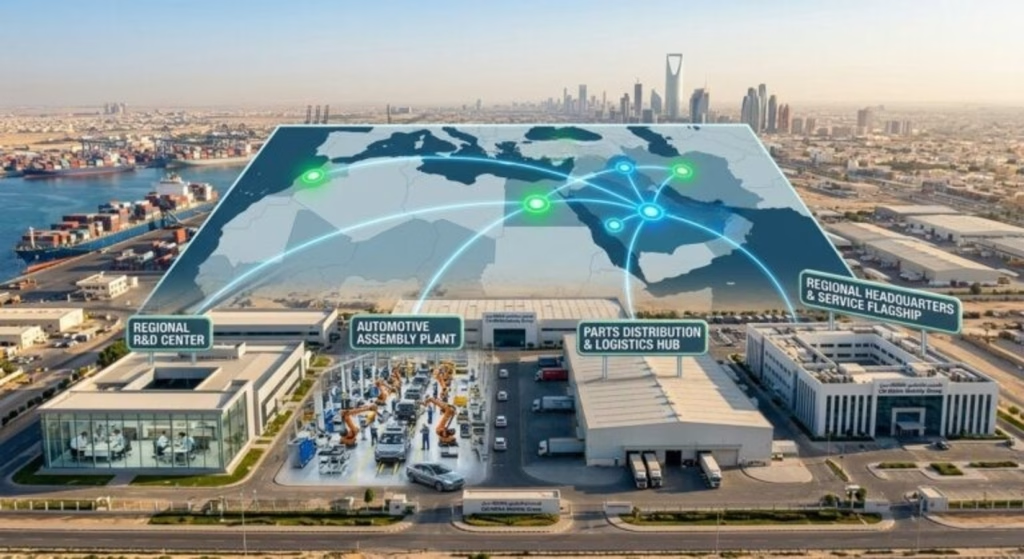
Chinese Auto Brands in MENA: More Than an Export Surge It is tempting for established players to read the arrival of Chinese brands in MENA as an export surge, a wave of competitively priced vehicles shipped in to win share on value. The kind of incursion that markets have seen before and that tends to plateau once the novelty fades. That reading is comfortable, and it is wrong. What is happening is not a shipping operation. It is a localisation strategy, and the distinction is everything, because exporters can retreat when conditions turn, but companies that have put down roots intend to stay. For Dealers/Importers and incumbents across the region, understanding the difference is the difference between preparing for a passing challenge and preparing for a permanent one. From shipping cars to building presence The signals of genuine localisation are accumulating, and they go far beyond sales volume. Chinese manufacturers are establishing research and development capability in the region, building operation centres that handle sales, service and warehousing, and partnering with local groups and sovereign investors to embed themselves in the regional economy rather than merely selling into it. Assembly and component localisation are advancing across the wider region, supported by industrial cities and clusters explicitly designed to attract Automotive manufacturing. Sovereign capital is flowing into Chinese mobility and electric vehicle ventures, aligning these brands with national industrial strategies and economic diversification goals. This is the behaviour of companies building a future in the region, not visitors testing a market. The strategic logic is sound and worth understanding, because it explains why this will not fade. Localisation lowers landed cost, shortens supply chains, aligns the brand with the host nation’s industrial ambitions, and crucially, begins to build the local credibility that imported badges initially lack. A brand assembling, researching and investing in the region can no longer be dismissed as a foreign opportunist. It becomes, over time, part of the local Automotive fabric, and that repositioning is precisely the point. It is worth being concrete about what putting down roots looks like, because the pattern is consistent. It is a regional headquarters or operation centre that runs sales, service and parts warehousing close to the customer rather than from a distant head office. It is research and development capability that tailors products to the region’s climate, roads and driving habits rather than shipping in vehicles designed for elsewhere. It is assembly and component work taking shape in the industrial cities and clusters that host nations have built specifically to attract it. And it is capital partnerships that bind the brand’s fortunes to the region’s own economic ambitions. Each of these is a stake driven into the ground, and collectively they describe a presence that is not going to be packed up and shipped home when a quarter disappoints. Why this changes the competitive picture For incumbents, the implication is uncomfortable. A competitor that exports can be out-waited. A competitor that localises has to be out-competed. The Chinese brands putting down roots are not making a short-term play for opportunistic share. They are building the supply chains, the service infrastructure, the local relationships and the regional credibility that turn a price-led entry into a durable market position. The window in which incumbents could treat them as a temporary value threat is closing. Equally important is what localisation does to the single biggest weakness these brands arrived with: trust. A brand the customer had never heard of three years ago is a difficult sell. A brand that researches, assembles and invests visibly in the region, that has built a real service and parts presence, and that is backed by recognisable local and sovereign partners, is a far easier one. Localisation is, among other things, a trust-manufacturing strategy. It systematically dismantles the very objection that incumbents have been relying on to hold their ground. What it means for Dealers/Importers For the Dealers/Importers carrying these brands, the localisation story is a powerful asset that is currently underused on the showroom floor. The salesperson facing a hesitant customer is not selling a foreign import. They are selling a brand that is investing in the region, building here, committing here, here to stay. That is a far stronger answer to the customer’s unspoken doubt, will this brand still be around, will I get parts and service, than any spec sheet or discount. The franchisees who learn to tell the localisation story will convert the doubt that holds buyers back. For incumbents carrying established brands, the message is different but no less urgent. The competitive advantage of heritage and trust, long taken for granted, is being actively eroded by competitors who are manufacturing exactly those qualities through visible local commitment. Responding requires more than defending on price. It requires reinforcing the relationships, the service excellence and the customer experience that genuine local roots are now being built to rival. The Chinese brands in MENA are not passing through. They are putting down roots, deliberately, strategically and visibly, and the localisation play is how a price-led entrant becomes a permanent fixture. The Dealers/Importers and incumbents who read this as a temporary export surge will be planning for a challenge that has already changed shape. The ones who recognise it as a long-term strategy, and respond in kind, will be the ones still standing when the roots have grown deep. AMENA Auto AMENA Auto helps Dealers/Importers and OEM principals across the MENA region respond to a market being reshaped by localisation. Through strategic consultancy, sales and aftersales training, customer experience and brand-trust programmes, mystery shopping, CSI and NPS measurement and AI-powered monitoring, we help franchisees turn the localisation story into showroom advantage and help incumbents defend the trust and experience that genuine local roots are now built to rival. To Find More, Win More and Keep More Clients, let’s talk. To find out how AMENA Auto can help your business turn the localisation shift into a lasting competitive advantage,visit www.amenaauto.com or contact our team directly. Contact us today at office@amenaauto.com
The Used Car Opportunity MENA Dealers Are Still Sleeping On
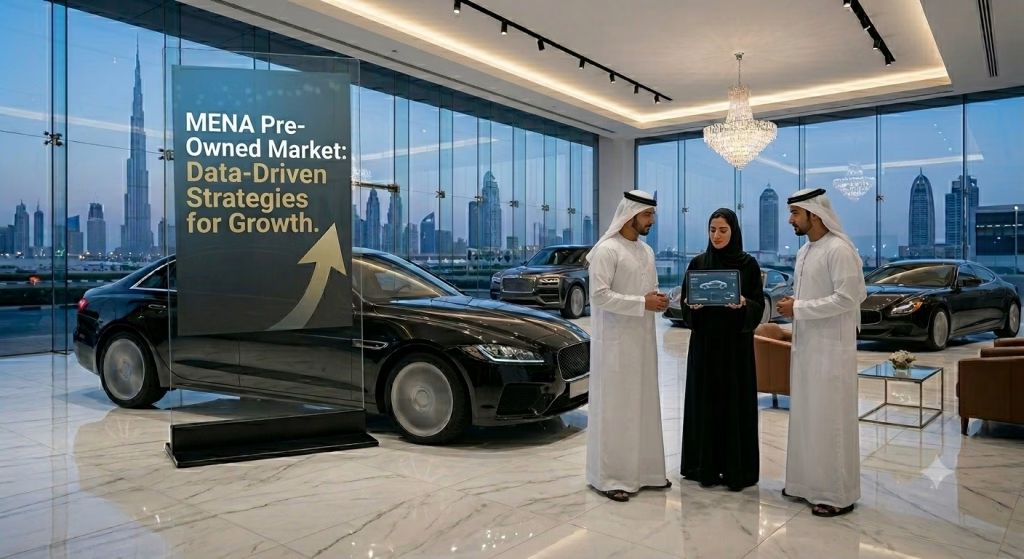
Walk into almost any new car showroom in Riyadh, Dubai, or Cairo and you will find the same picture. Polished new metal under the spotlights. A dedicated sales team. A digital configurator on the wall. A full-page advertising spend behind the launch. Walk around the back, to where the trade-ins are parked, and the contrast tells its own story. The used vehicle operation is often run by fewer people, with less investment, in less visible space, against softer KPIs, and reporting into a management layer that thinks of it as a necessary support function for the new car business. That picture is increasingly hard to defend commercially. The used vehicle market across the Middle East and North Africa is one of the most under-developed profit opportunities in regional Automotive retail, and the Dealers/Importers who recognise this in the next 24 months will be the ones rewriting the local league tables by 2030. The Numbers Are Hard to Ignore The GCC used car market was valued at approximately USD 24.5 billion in 2025 and is forecast to grow at a compound annual rate of around 8% to reach close to USD 49 billion by 2034, according to IMARC Group. The broader Middle East used car market crossed USD 51 billion in 2025 and is projected to more than double over the same period. By comparison, the region’s overall Automotive market is growing at roughly 3% a year. In plain English, the used vehicle market is growing more than twice as fast as the new vehicle market in the region. Yet the proportion of regional Dealer/Importer investment, talent, and management attention flowing into used vehicles remains a fraction of what flows into new car retail. The structural reasons are well known. Historically, the region’s new car culture has been reinforced by buoyant new vehicle supply, generous finance, low fuel prices, and a generation of buyers conditioned to buy new. That picture is changing. Younger MENA consumers, more cost-conscious expatriate populations across the Gulf, and a growing certified pre-owned segment are reshaping demand from the customer side. Digital platforms like Dubizzle Motors, YallaMotor, CarSwitch, and SellAnyCar.com are reshaping it from the supply side. The traditional Dealer/Importer model is being squeezed between both forces, and most operators are responding too slowly. Where the Margin Actually Sits The used vehicle profit pool in MENA is concentrated in three places, and most regional operators are only meaningfully active in one of them. The first is the sale itself. Gross margins on a well-bought, well-reconditioned used vehicle should comfortably outperform new vehicle gross in percentage terms. In benchmark global operations, used vehicle gross per unit often runs at 1.5 to 2 times new vehicle gross per unit. Across the MENA region, the gap between best-in-class and average is significantly wider, often because the used vehicle is bought reactively as a trade-in rather than sourced strategically. The second is the finance, insurance, and protection products attached to the sale. F&I penetration on used vehicles in the region is typically lower than on new, despite the customer profile often being a better fit for finance and warranty products. Get this right and the per-unit profit on a used sale can rival or exceed that of an equivalent new vehicle. The third, and the most overlooked, is the aftersales annuity that follows. A customer who buys a used vehicle from a trusted dealer is a customer in your workshop for the next three to five years, and a future buyer of their next vehicle if you handle them properly. Most regional Dealers/Importers do not build their used vehicle proposition around this lifetime relationship. They treat the used sale as a transaction. The operators winning on used vehicles treat it as the start of a service and ownership journey. The Five Capabilities That Separate the Winners The Dealers/Importers who are quietly building category-leading used vehicle operations across the region share five operational capabilities. None of them are exotic. All of them require investment, discipline, and senior management commitment. 1. Strategic sourcing, not reactive trading. The best used operations source vehicles deliberately. Trade-ins are valued accurately using live market data, auctions are worked, lease returns are tracked, and direct-from-consumer programmes are built into the digital front end. Inventory mix is managed against demand data, not against whatever happens to drive onto the forecourt that week. Operators still relying on instinct and the appraiser’s notebook are losing margin on every transaction. 2. Reconditioning as a discipline, not an afterthought. A used vehicle that has been properly reconditioned to a documented standard sells faster, at a higher price, with fewer post-sale issues, and with stronger F&I attachment. Reconditioning in many regional dealerships remains inconsistent, under-invested, and detached from the sales operation. The operators leading the category have built reconditioning as a structured process with defined standards, defined cost lines, and defined turnaround times, and they protect it from being squeezed by new car workshop pressure. 3. A certified pre-owned proposition that customers can actually feel. OEM-backed CPO programmes are growing across the region, but their commercial execution at the dealer level remains patchy. A genuine CPO proposition is not a sticker. It is a multi-point inspection standard the customer trusts, a warranty they understand, a finance and protection package they can compare to new, and a showroom experience that matches the price point. Where this is done properly, CPO units transact at a meaningful premium and pull through stronger F&I attachment than non-certified used. 4. Digital retailing built for the used customer, not the new one. Used vehicle buyers research more, compare more, and decide faster than new car buyers. A digital experience built around the new car configurator does not serve them. The operators winning on used vehicles in the region have built dedicated digital retail experiences, with full vehicle history transparency, clear pricing, integrated finance pre-qualification, and direct routes to test drive booking. Platforms like Dubizzle and YallaMotor are setting the customer expectation. Dealers/Importers either match it or